







The U.S. Army is racing to build 17 reinforced concrete bunkers across the Middle East to protect American and coalition troops from missile and drone attacks, replacing makeshift shelters made from converted shipping containers. The service posted an urgent call for contractors on November 13, giving firms just three days to respond — and 45 days to finish the work once a task order is issued.
What the Army wants built
The notice, posted on the federal contracting site sam.gov, calls for 17 standardized precast, reinforced concrete Indirect Fire bunkers across five military installations: 10 in Israel, five in Saudi Arabia and two in Lebanon. The exact base locations are being withheld for security reasons and will be given only to verified, eligible contractors once the formal solicitation is released.
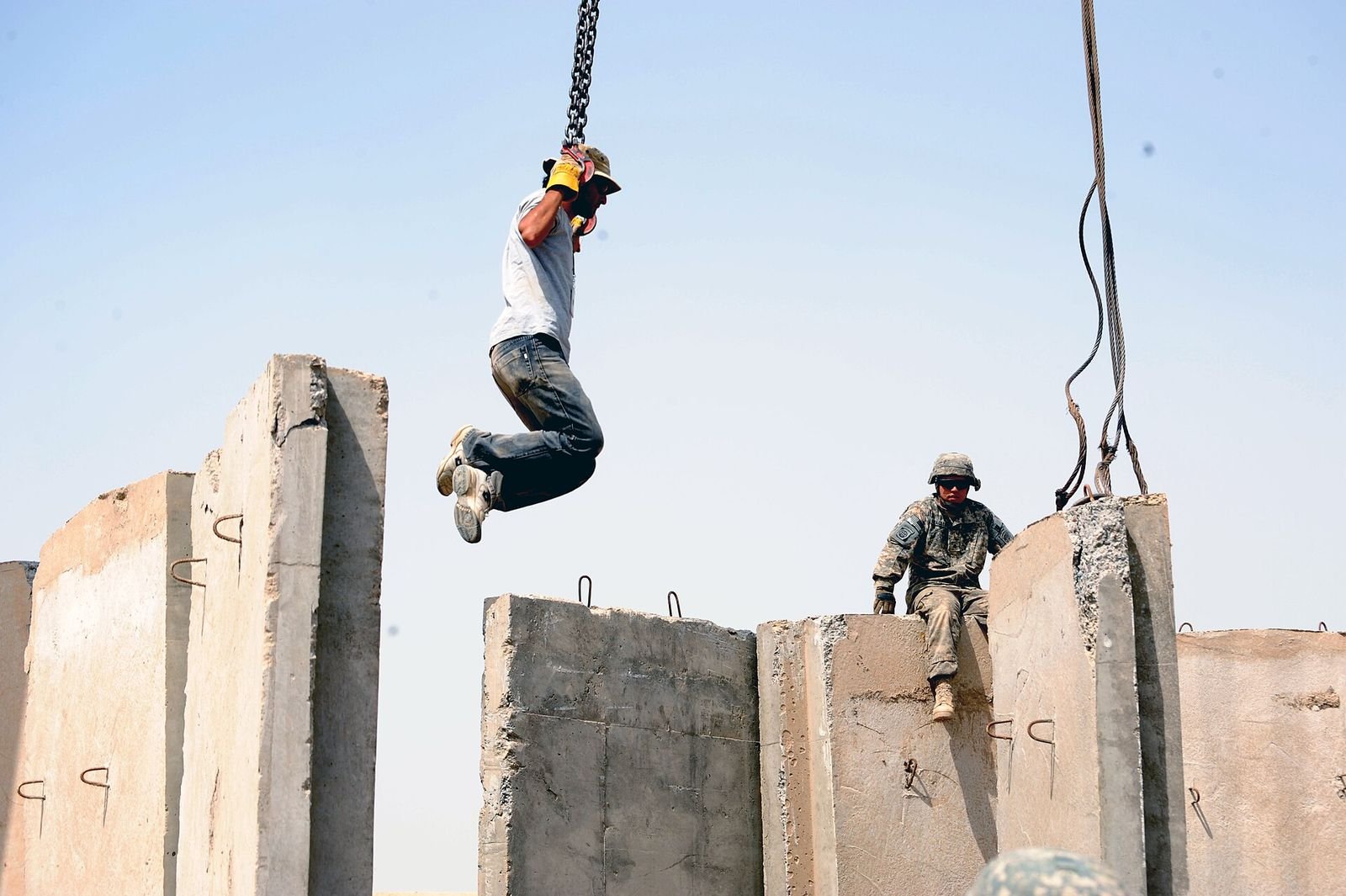
Each bunker will be built from three precast, reinforced concrete sections, with steel entrance doors shielded by concrete barriers and sandbag-reinforced exterior walls. The roofs will be covered with at least 18 inches of layered sandbags to protect against incoming fire.
“Due to elevated regional force protection conditions, there is an urgent, high-priority requirement to replace nonstandard personnel protection shelters (e.g., converted shipping containers) and provide standardized, precast, reinforced concrete Indirect Fire bunkers,” the notice states. “The objective is to safeguard U.S. and coalition service members operating in potentially hostile environments across multiple countries in [U.S. Central Command] Area of Responsibility.”
The bunker plan at a glance
| Country | Installation sites | Bunkers |
|---|---|---|
| Israel | 1 | 10 |
| Saudi Arabia | 2 | 5 |
| Lebanon | 2 | 2 |
| Total | 5 | 17 |
Why now
The move comes nine months into the war between the United States and Iran, which began on February 28, 2026, and as Iranian missile and drone attacks on American bases in the region continue. The Army’s notice is unusually blunt about the danger: “Due to extreme operational urgency (soldiers currently at risk using non-standard containerized shelters), the subsequent solicitation is anticipated to have an expedited 3-day quote turnaround window.”
President Donald Trump said on November 16 that American defensive measures in the region had been effective. But the rush to pour concrete tells its own story: the Pentagon expects its troops in the Middle East to remain under fire, and it wants them behind something stronger than a shipping container.
The clock
Contractors have until 3 p.m. EST on November 25 to submit capability statements of no more than eight pages, saying whether they can work in all three countries or only in certain locations. The Army is looking for licensed construction and engineering firms with immediate cross-border and local mobilization capabilities in Israel, Saudi Arabia and Lebanon.
The notice is a sources-sought request — a survey of industry capacity rather than a contract award — issued by the Army Contracting Command for U.S. Army Central, with Area Support Group-Jordan’s Directorate of Public Works acting as the servicing agency. Once a contractor is selected, each country task order will carry a 45-day performance period.
What to watch next
The bunker rush is the latest sign of how the Iran war is reshaping the American footprint in the Middle East. The same week the notice went out, the Pentagon was also weighing a permanent U.S. military base in Poland and the future of about 80,000 American troops stationed across Europe. In the Middle East, the question is more immediate: how fast can concrete go up before the next attack comes.
Sources: Defense News, Military Times, sam.gov, Fox News, November 2026.