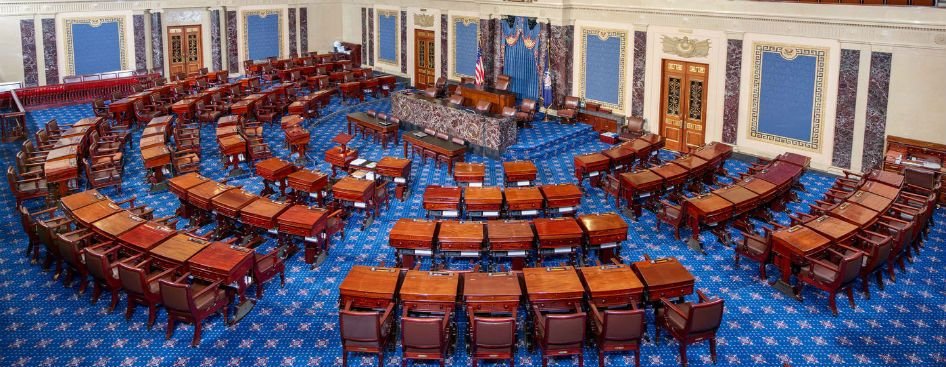
The United States Senate voted 51 to 48 on Thursday to reject a resolution that would have directed President Donald Trump to end the war in Iran or obtain Congress’s approval to continue it, handing the president a narrow win weeks after midterm elections in which the conflict weighed heavily on voters.
The vote fell largely along party lines. Only three Republicans — Susan Collins of Maine, Lisa Murkowski of Alaska and Rand Paul of Kentucky — voted with Democrats in favor of the resolution. Only one Democrat, John Fetterman of Pennsylvania, voted with Republicans against it.
The measure was the latest in a series of congressional attempts to curb the president’s authority to order the military into hostilities with Iran without authorization from Congress. It had already passed the House of Representatives in September by 220 votes to 204.
A symbolic rebuke that fell short
The resolution was introduced under the 1973 War Powers Resolution, which was written to give Congress a way to direct a president to remove American forces from hostilities. But the measure did not have the force of law: even if it had passed the Senate, it would not have required the president’s signature, and the White House has rejected the validity of such measures before.
That did not stop the fight over it. Democrats forced the vote using a privileged motion, a procedure that compels the Senate to act — and one they have used repeatedly to keep the war-powers question on the agenda. For Republicans, the vote was the first test of party unity on the war since the midterm elections on November 3, in which the party lost nine Senate seats.
The tally was almost unchanged from a war powers vote taken in late September. The one difference was Senator Thom Tillis of North Carolina, who had supported the earlier resolution but voted with Republicans this time.
What the vote means
President Trump never asked Congress to authorize military action against Iran, even though the Constitution reserves the power to declare war to the legislative branch. Thursday’s vote leaves that question unresolved — and opponents of the war are expected to keep looking for other ways to force the issue.
Democrats are also looking ahead. After their November 3 election wins, they will take control of Congress on January 3, with a 56-44 majority in the Senate and a 257-172 majority in the House. Early votes are expected on legislation that would limit the president’s ability to wage war on Iran without Congress’s approval, which supporters say would also help lower gasoline prices. The new majority is also expected to push to reverse deep cuts to Medicaid and the SNAP food stamp program, and to test how far Republicans are willing to cooperate on the new agenda.
For now, though, the war continues without the congressional authorization its critics have sought — and the Senate’s 51-48 vote shows that, even after a bruising midterm defeat, Republicans in the chamber are still unwilling to force an end to it.
Sources: Reuters, November 19, 2026; The Washington Examiner, November 20, 2026.