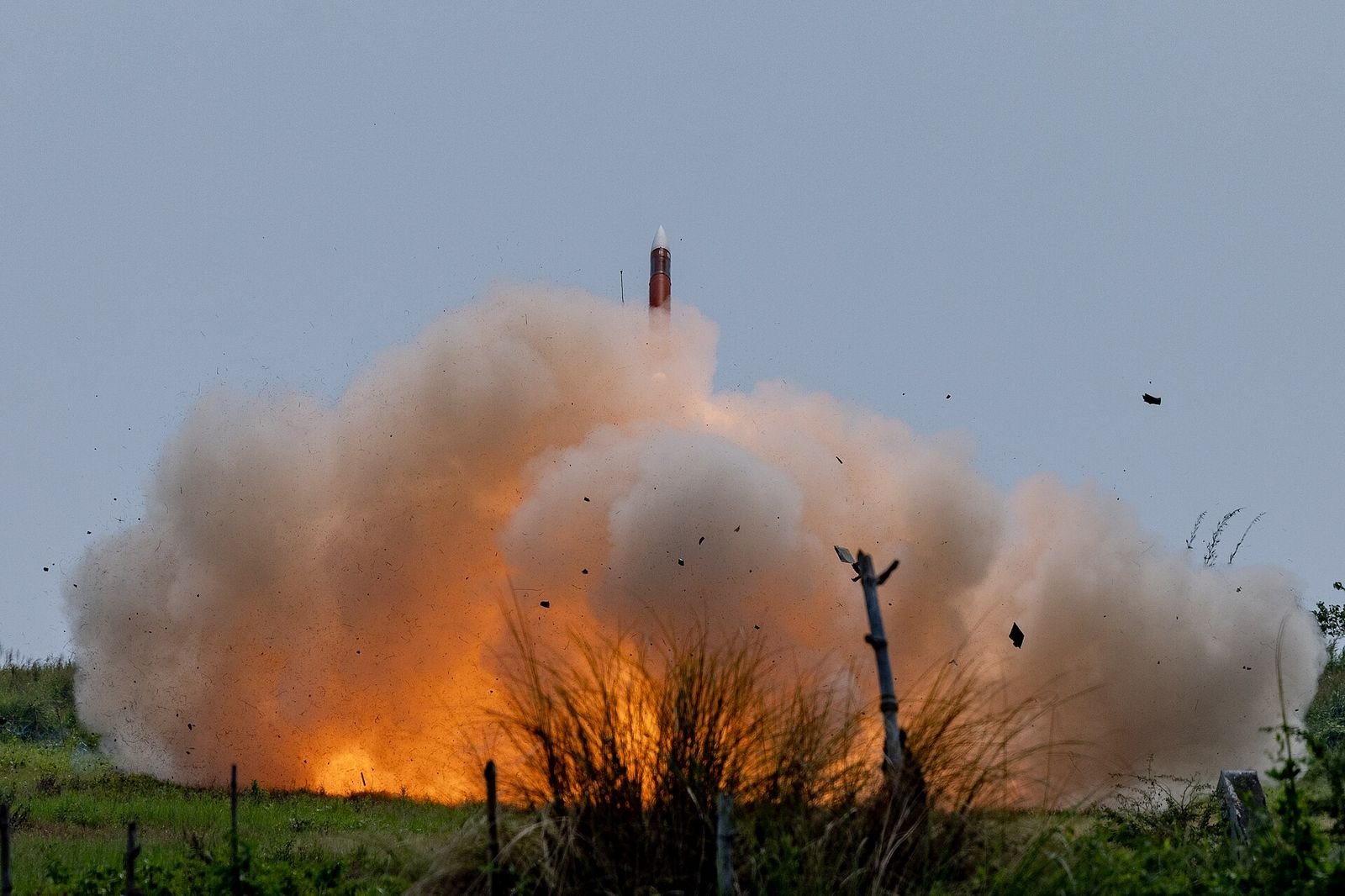
About 60 Patriot air-defense interceptors promised to Ukraine are sitting undelivered, waiting on a signature that has not come. The Financial Times reported on Tuesday that Defense Secretary Pete Hegseth has yet to approve the transfer, even though the missiles were already allocated to Kyiv and in some cases paid for by its Western allies.
Sixty interceptors, no signature
The outstanding missiles include the newest PAC-3 interceptors, the version designed to shoot down ballistic missiles, and about 20 older PAC-2 interceptors. Some of them are held in European arsenals, and their purchase was financed by Kyiv’s Western partners through a NATO-coordinated program. Because the Patriot is an American system, every transfer needs Washington’s approval — even one out of a European ally’s own stocks.
The Financial Times, citing two Ukrainian officials and a third person familiar with the matter, reported:
| Interceptor | Number | Scheduled delivery | Status |
|---|---|---|---|
| PAC-3 | 8 | September 2026 | Not approved |
| PAC-3 | 10 | October 2026 | Not approved |
| PAC-3 | 10 | November 2026 | Not approved |
| PAC-3 | 12 | December 2026 | Not approved |
| PAC-2 | About 20 | Allocated | Not approved |
Not one of the four PAC-3 batches has been cleared. Reuters, which reported the story on Tuesday, said it could not immediately verify the Financial Times account, and the Pentagon did not immediately respond to a request for comment.
Why the hold-up
Ukraine has repeatedly said it urgently needs more interceptors to counter growing Russian missile and drone attacks on its cities and power grid. President Volodymyr Zelenskyy raised the issue again in an evening address on November 23, stressing the need for American decisions to protect Ukrainian cities and critical infrastructure from Russian strikes.
The delay has a hard mathematical cause. The United States’ own Patriot stockpile has been drained by the war with Iran: estimates from the Center for Strategic and International Studies, cited by NPR, put the stockpile at more than 2,300 interceptors before the Iran war began on February 28, and down to roughly 800 by August. Every interceptor sent to Kyiv is one fewer for American bases in the Middle East, and Hegseth has said openly that protecting American troops comes first.
“We haven’t changed our posture in any way toward the Ukrainians,” Hegseth said on October 20 in Eau Claire, Wisconsin, “but with things like interceptors, we want to make sure our guys have the most possible as well.” On October 26, Zelenskyy said Kyiv had been waiting almost a month for Hegseth’s signature on contracts covering Patriot and NASAMS missiles. The NASAMS missiles have since been released. The Patriots have not.
The production file is stuck too
A second file is delayed as well: the deal that would let Ukraine build its own Patriot interceptors. President Donald Trump promised Kyiv the licence at the NATO summit in Ankara on July 8, telling reporters: “We will give the licence.” According to the Financial Times, Hegseth signed off on the arrangement, but it was then sent for another review by Michael Duffey, the Pentagon’s top acquisition official, for reasons that remain unclear.
Ukrainian officials who spoke to the newspaper fear the delays could be a tool of political pressure by Washington on Kyiv during peace negotiations. The Pentagon rejected that reading. “There has been no change to Department of War policy regarding support to Ukraine,” a Pentagon spokesperson told the Financial Times, declining further comment. The department added that it continues work to “accelerate transatlantic industrial co-operation” on Patriot production with European partners and Ukraine.
What happens next
The United States is not cutting Ukraine off entirely. On October 30, the State Department approved the possible sale of another 500 PAC-3 interceptors to Ukraine, worth about $2.1 billion. But an approval to buy is not the same as missiles in launchers, and Ukraine is heading into winter with Russian strikes intensifying.
Zelenskyy has proposed that allies transfer interceptors from existing stocks in exchange for new missiles Kyiv has already ordered. Whether that swap — or Hegseth’s signature — comes first will decide how well Ukraine’s air defenses hold through the winter.
Sources: Financial Times, November 24, 2026, via Reuters, November 24, 2026; Reuters, November 24, 2026; NPR, October 2026; Kyiv Independent, October 19, 2026.