










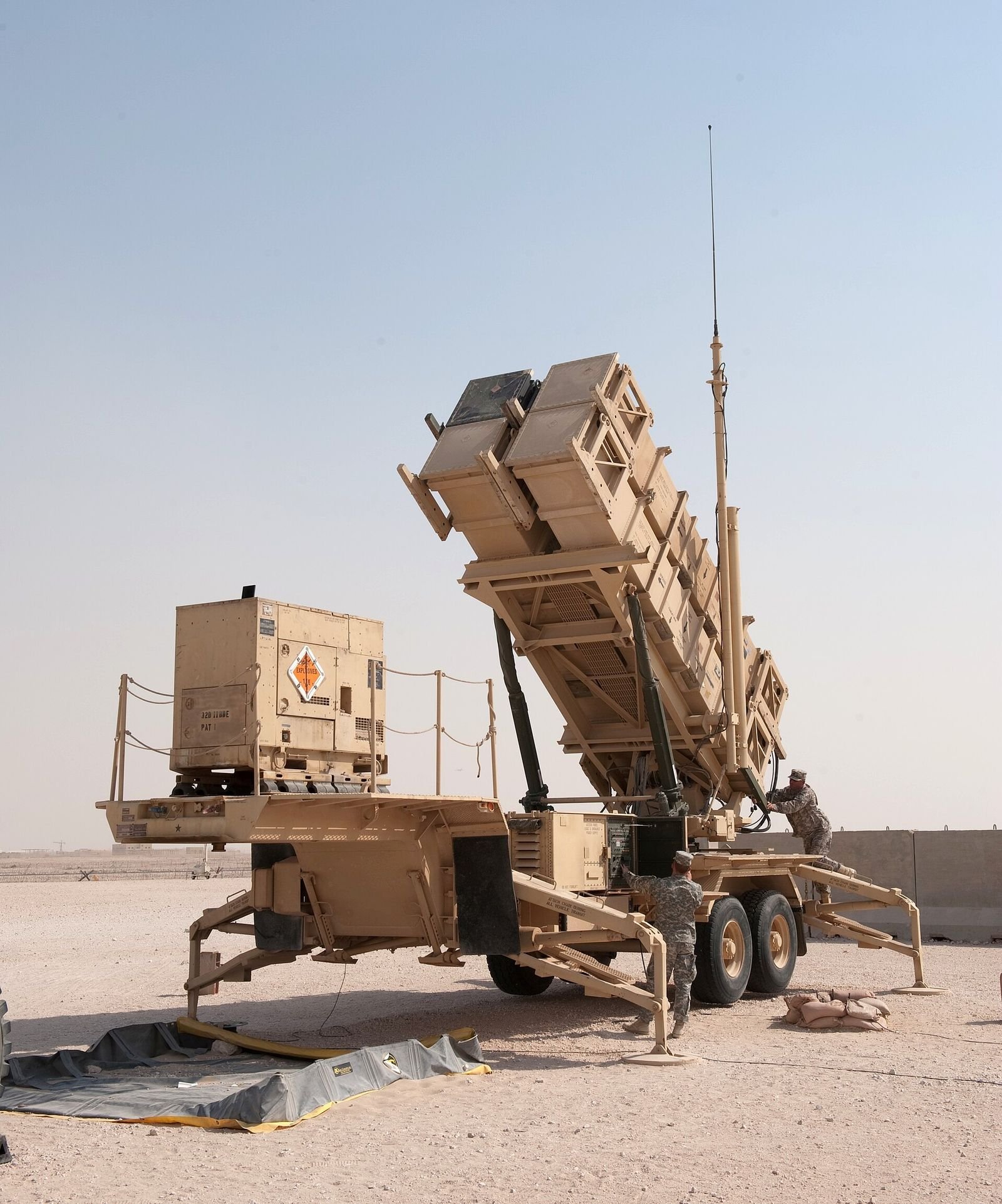
The Pentagon has no overarching plan to rebuild America’s depleted stocks of missiles and other munitions, and it has not put any single office in charge of fixing the problem, the Government Accountability Office said in a report released on Thursday.
The report, “DOD Munitions: Planning and Leadership Needed to Address Persistent Shortages” (GAO-27-109420), is the public version of a classified study issued to Congress on September 24. It warns that without a plan linking production and funding to requirements, the department risks buying the wrong weapons in the wrong quantities. The 2026 conflict with Iran, it says, has “heightened the importance” of the stockpile problem.
What the watchdog found
The GAO’s central finding is blunt: the Department of Defense “does not have an overarching plan that links munitions production and funding to requirements.” Officials from the Joint Staff, U.S. Indo-Pacific Command, the Office of the Secretary of Defense and all four military services told the GAO the department is left reacting to events instead of being driven by what the military needs.
The report identifies three further gaps. First, no office or official has been given the authority to direct and assess the effort to rebuild inventories. Second, the Pentagon’s department-wide tracking tool — the Munitions Readiness Initiative, which senior leaders use for a near real-time view of stocks — draws on 37 separate data sources, some automated and some updated by hand, and the Pentagon has not regularly reconciled its numbers against the services’ own inventory systems. Third, the tool was built without a data management plan or a data dictionary, so there is no agreed standard for combining the services’ data.
| GAO finding | What the GAO recommends |
|---|---|
| No overarching plan linking production and funding to requirements | Develop a plan with long-term goals, strategies and metrics |
| No office or entity in charge of improving inventories | Designate an office and give its leaders authority to carry out the plan |
| Inventory data not regularly reconciled with the services | Set regular timelines for reconciliation |
| No standard for combining service data | Develop a data management plan and a data dictionary |
The Pentagon generally concurred with all four recommendations.
What the Iran war cost the stockpile
The report does not publish inventory figures — those were removed from the public version as classified or sensitive. But the scale of the problem is visible in independent estimates. The Center for Strategic and International Studies has estimated from public information that the war consumed roughly half of the pre-war inventory of Patriot interceptors, THAAD interceptors and the Army’s new Precision Strike Missile, and about a third of the stocks of the Navy’s SM-2, SM-3 and SM-6 missiles, the air-launched JASSM and the Tomahawk cruise missile. The Pentagon has not published its own totals. The Center projects that Tomahawk stocks will not return to pre-war levels until late 2030.
Years of warnings, billions spent
The shortages are not new. In 2025, the Defense Department’s Acting Assistant Secretary of Defense for Sustainment testified that the department had a shortage of several key munitions. Congress has appropriated huge sums to fix the problem, including at least $25 billion in 2025 to strengthen munitions capabilities and increase the stockpile. The Pentagon has taken steps, including a Munitions Acceleration Council set up in July 2025 to speed missile production. But according to the report, that council had no formal signed charter as of November 2026, and none of the three strategy documents that touch on munitions ties production and funding to the inventory levels needed.
The findings land as President Trump reportedly considers another round of major airstrikes against Iran,



One thought on “GAO: Pentagon Has No Plan to Rebuild Missile Stocks Drained by the Iran War”