










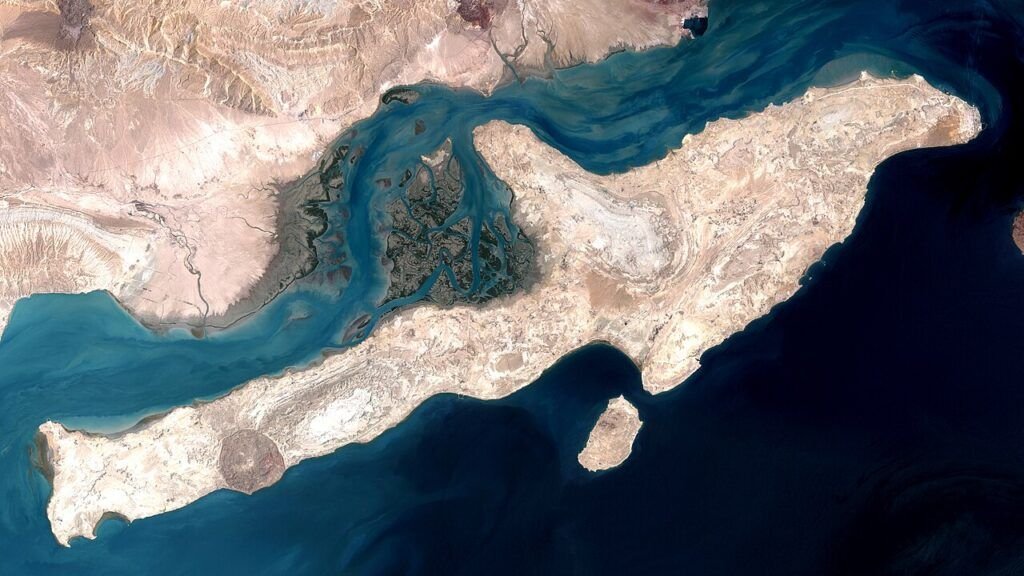
American fighter jets struck an Iranian Revolutionary Guard missile launch site on Qeshm Island on Tuesday, a U.S. military official told Reuters, in the sharpest exchange between the United States and Iran in the Gulf in months.
The strike, at the narrow entrance to the Strait of Hormuz, was carried out in retaliation for Iran’s targeting of U.S. personnel and assets, the official said. U.S. Central Command described the strikes as defensive, carried out by fighter aircraft using precision munitions against a missile launch site belonging to Iran’s Revolutionary Guard Corps.
Iran answered within hours. Its army said it targeted U.S. installations at Kuwait’s Ali Al Salem Air Base, the first Iranian attack on the oil-rich country since September. Kuwait’s military said its air defenses were responding to hostile drones early on Wednesday. Bahrain, meanwhile, said it intercepted Iranian aerial attacks for the third time this week, and its Interior Ministry issued shelter-in-place alerts to residents.
A week of attacks, and a widening map
The Qeshm strike did not come out of nowhere. It followed an Iranian drone attack on a radar system in Bahrain over the weekend, and another Iranian drone attack on U.S. forces in Bahrain that prompted civilian shelter alerts. Iranian officials said the Qeshm strikes caused no damage to residential or commercial areas.
The exchange has spread across the Gulf’s map. An oil tanker operated by Adnoc, the Abu Dhabi state oil company, was attacked in the Strait of Hormuz, and Gulf stock markets fell in early trading on Wednesday as the hostilities escalated. Oil prices fell as U.S. crude and fuel stockpiles rose, though the ongoing attacks and disruptions to shipping through the strait limited the losses, Reuters reported.
The strait is the world’s most important oil chokepoint, and every incident there raises the same question: how far does either side want this to go? So far, the pattern has been strike and counter-strike, each side describing its own actions as defensive and warning the other against escalation.
What to watch next
The immediate question is whether the exchange stops here or widens. Turkey, Saudi Arabia and Pakistan are holding their latest round of talks on the crisis, and diplomacy between Washington and Tehran has stalled, with President Trump halting negotiations and Iranian officials warning of severe retaliation if the U.S. maintains its naval blockade.
For now, U.S. Central Command says it remains vigilant to protect Americans in the region. The third U.S. aircraft carrier in the Middle East — the USS Theodore Roosevelt, whose arrival was reported earlier this week — is part of the buildup that underpins that warning.
Sources: Reuters, November 17-18, 2026; U.S. Central Command statements as reported by Fox News, November 17, 2026; Associated Press, November 18, 2026.
2 thoughts on “US Jets Strike Iranian Missile Site on Qeshm Island as Iran Hits Back at Bases in Kuwait and Bahrain”