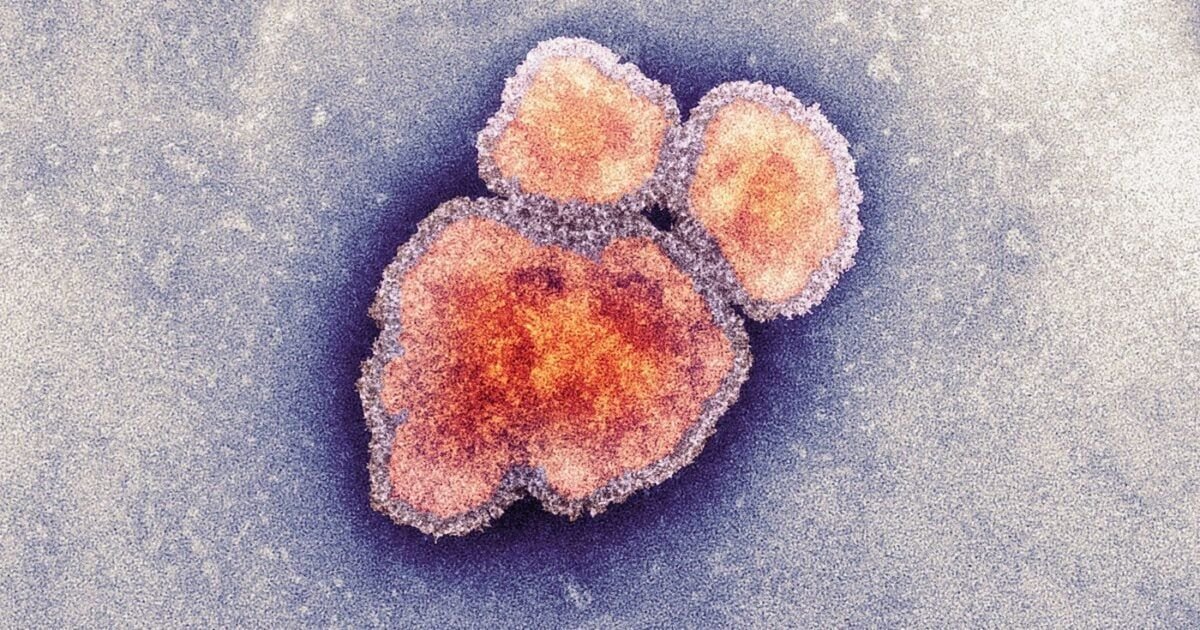
The United States has officially lost its measles elimination status, a public health milestone it held for 26 years, the Pan American Health Organization announced on Tuesday.
PAHO, the World Health Organization’s regional office for the Americas, determined that measles has spread continuously in the country for more than 12 months. The status, held since 2000, is lost when a country fails to stop the same strain of the virus circulating uninterrupted for a year or more.
The numbers behind the decision are the worst in a generation. The Centers for Disease Control and Prevention has confirmed 5,412 measles cases in 2026 as of November 12, across 45 states — the highest annual total since 1991, and more than double the 2,289 cases recorded in all of 2025. At least 10 people have died from the disease this year, in Pennsylvania, New York and Wisconsin, and 43 outbreaks have been recorded.
How it happened
The outbreak that cost the country its status began on January 20, 2025, in Texas, and the 12-month threshold of continuous transmission was reached in January 2026. PAHO’s independent verification commission reviewed the evidence in Washington over three days before its director, Dr. Jarbas Barbosa, issued the formal decision on November 17.
The pattern of who is getting sick is stark: about 96 percent of this year’s cases were in people who were unvaccinated or whose vaccination status was unknown. Two doses of the MMR vaccine are about 97 percent effective, according to the CDC, and health officials have repeatedly said the outbreak was preventable.
The United States is not alone. PAHO also declared endemic measles transmission re-established in Mexico and Bolivia on the same day. Canada lost its elimination status in November 2025, followed by the United Kingdom in January 2026.
What it takes to win it back
Regaining the status is straightforward in principle and hard in practice: the United States must stop the continuous spread of the disease for at least 12 months. PAHO expects the U.S., along with Mexico and Bolivia, to submit a corrective action plan in the coming weeks setting out how it will do that.
Health Secretary Robert F. Kennedy Jr. has pledged to stop the outbreaks and work to regain the status. The challenge is that measles is one of the most contagious viruses known — it can linger in the air for up to two hours after an infected person leaves a room — so even small pockets of unvaccinated people can keep transmission going.
The loss of the status does not mean measles is everywhere. It means the country can no longer claim to have interrupted endemic transmission, a distinction the United States earned in 2000 after decades of vaccination campaigns. Getting it back will take a year of unbroken success.
Sources: Associated Press, November 17, 2026; Pan American Health Organization, November 17, 2026; Centers for Disease Control and Prevention data as reported by USA Today and Healthline, November 17, 2026.