








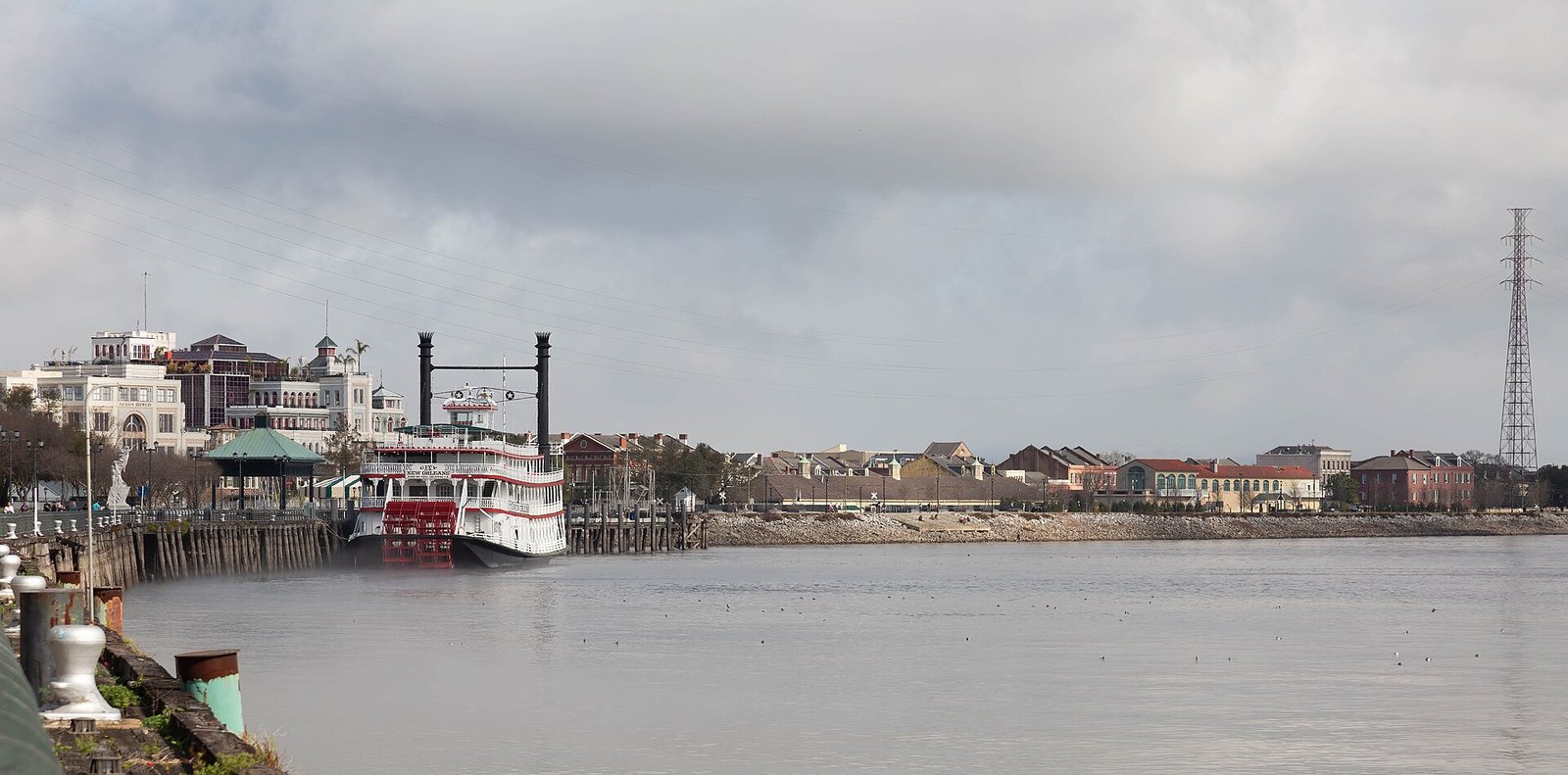
A steering failure aboard a tanker sent the vessel veering across the Mississippi River into a docked cruise ship in New Orleans on Friday, capsizing the riverboat and throwing dozens of people into the water, federal safety officials confirmed on Sunday.
The National Transportation Safety Board said the 520-foot tanker Atlantic Asphalt suffered what investigators called a steering casualty shortly before the collision. Its rudder remained locked to starboard, and the tanker struck the American Heritage, a paddlewheel riverboat operated by American Cruise Lines, at the Thalia Street Terminal at about 12:28 p.m. local time.
All 190 people aboard the riverboat survived. Thirty-two people, including two police officers who helped with the rescue, were taken to hospitals with non-life-threatening injuries. Six people remained in hospital as of Sunday.
Two minutes from steering loss to impact
Preliminary findings from the tanker’s voyage data recorder, which investigators have recovered, give the first official explanation for the crash. The steering casualty occurred at about 12:26 p.m. local time while the tanker was heading upriver near the Crescent City Connection bridge. The vessel veered toward the east bank and struck the American Heritage within two minutes.
Crew aboard the tanker deployed emergency anchors and spent about two minutes trying to clear the stuck rudder before the impact. The tanker was carrying 19 crew members and a local pilot and was en route to an oil facility in Reserve, Louisiana.
NTSB investigator-in-charge Bart Barnum said the tanker experienced the steering casualty before the crash. NTSB board member John DeLeeuw said the struck riverboat rolled onto its side and capsized within 22 minutes of the impact, coming to rest partially submerged in about 25 feet of water.
Investigators have not yet determined what triggered the rudder lockup, and the NTSB declined to release details on the tanker’s speed, saying the data was still being analysed.
Everyone aboard survived
The American Heritage was disembarking passengers at the time of the crash. The NTSB said 140 passengers and 50 crew were aboard. New Orleans Mayor Helena Moreno told a news briefing that all of them had been accounted for.
Passengers rushed to gather life jackets as the boat listed dangerously toward the water. Some escaped to the wharf, while about 100 people ended up in the river. Tugboats, police, port workers and emergency crews pulled people from the water one by one.
The collision has also triggered legal action. The Port of New Orleans has filed a federal lawsuit against the tanker, its owner Nave Shipping and its manager Thome Ship Management, estimating damage to the terminal at more than $1 million. A federal judge has seized the Atlantic Asphalt, which has been towed to Gretna, while the Coast Guard offloads an estimated 16,000 gallons of fuel from the capsized riverboat.
| The New Orleans collision at a glance | |
|---|---|
| Date and time | Friday, November 13, about 12:28 p.m. local time |
| Location | Thalia Street Terminal, Mississippi River, New Orleans |
| Tanker | Atlantic Asphalt, 520 feet, 19 crew and a local pilot |
| Riverboat | American Heritage, 140 passengers and 50 crew |
| Cause | Steering casualty — rudder locked to starboard |
| Injuries | 32 people hospitalised, none with critical injuries |
| Deaths | None — all 190 people aboard survived |
What happens next
The NTSB said a preliminary report is expected within about 30 days, while a final report could take 18 to 24 months. Investigators expect to remain on site about a week, and will continue crew interviews and analysis of radio, whistle and navigation recordings to reconstruct the sequence of events.
Sources: National Transportation Safety Board via Baird Maritime, The Associated Press, Particle News.