








A Deep Dive Into Mount Everest: The Helicopter Landing, the Fossils and the $80,000 Climb
Mount Everest is the highest mountain on Earth — and one of the strangest. Its summit holds the fossils of sea creatures, only one helicopter has ever landed on it, and climbing it can cost more than a house deposit. Here is the mountain, from the ocean floor to the death zone.
The Only Helicopter Landing in History
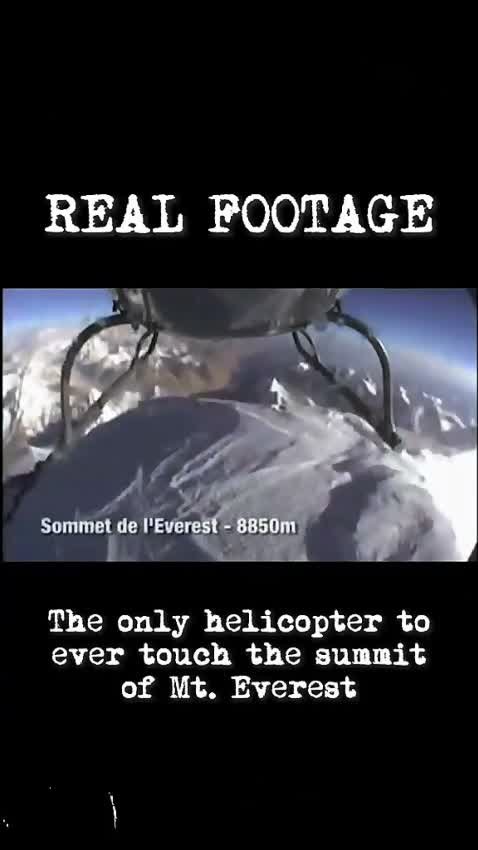
The opening footage of the video is real. On May 14, 2005, French test pilot Didier Delsalle landed a Eurocopter AS350 B3 on the summit of Everest — the only helicopter landing on the summit ever made. The aircraft was a near-standard production machine, stripped of 120 kilograms of unnecessary weight, and it was only certified to operate up to about 23,000 feet. The summit is 29,032 feet. Delsalle hovered with one skid on the snow for 3 minutes and 50 seconds — the aviation authority, the FAI, requires at least two minutes to count as a landing — then flew back down to Lukla. His onboard recorder had malfunctioned, so he went back the next morning and did it again, staying about four minutes. The records for the highest helicopter landing and takeoff still stand.
The Mountain With Three Names
Everest stands 8,849 metres (29,032 feet) above sea level, on the border of Nepal and China. It is named after Sir George Everest, the Surveyor General of India whose surveyors measured the peak in the 1850s — though he never saw it and reportedly objected to the honour. The people who live beside it call it something else: Chomolungma in Tibetan, “Goddess Mother of the World”, and Sagarmatha in Nepali, “Goddess of the Sky”.
Taller Than Everest — From the Base
Everest is the highest point above sea level, but it is not the tallest mountain from base to peak. That title belongs to Mauna Kea in Hawaii, which rises about 10,210 metres (33,500 feet) from the ocean floor — most of it underwater, with only about 4,207 metres above the waves. Kilimanjaro, by comparison, stands 19,341 feet above sea level. Everest’s supremacy is about altitude, not total height.
A Mountain Built by a Collision
Everest exists because India is still crashing into Asia. Around 50 million years ago the Indian tectonic plate collided with the Eurasian plate, and the Himalayas have been rising ever since — by a few millimetres a year. The proof is on the summit itself: the rock at the top of Everest is limestone laid down on an ancient ocean floor, and climbers find the fossils of sea creatures — ammonites, coiled shells millions of years old — in the rock near the top of the world.
The Climb
The standard route starts with a roughly 12-day trek to South Base Camp at about 5,364 metres, and the summit push passes through the Khumbu Icefall, a shifting maze of ice towers and crevasses crossed on ladders. Above 8,000 metres lies the “death zone”, where the air holds about a third of the oxygen at sea level and the human body slowly dies, even at rest. A guided expedition typically costs $35,000 to $80,000 per person, and the most luxurious packages run far higher. More than 300 climbers have died on the mountain. The first confirmed summit was Sir Edmund Hillary and Tenzing Norgay on May 29, 1953; George Mallory and Andrew Irvine, who vanished on the mountain in 1924, may or may not have reached the top first — Mallory’s body was found in 1999, and the question is still open.
Mount Everest at a Glance
| Fact | Mount Everest |
|---|---|
| Height | 8,849 m (29,032 ft) above sea level |
| Location | Nepal–China border, Himalayas |
| Local names | Chomolungma (Tibetan), Sagarmatha (Nepali) |
| Named for | Sir George Everest, Surveyor General of India |
| First confirmed summit | Hillary and Tenzing Norgay, May 29, 1953 |
| Only helicopter landing | Didier Delsalle, AS350 B3, May 14, 2005 |
| South Base Camp | ~5,364 m |
| Death zone | Above 8,000 m |
| Typical expedition cost | $35,000–$80,000+ per person |
Sources: Wikipedia, SnowBrains, Airbus Helicopters.