










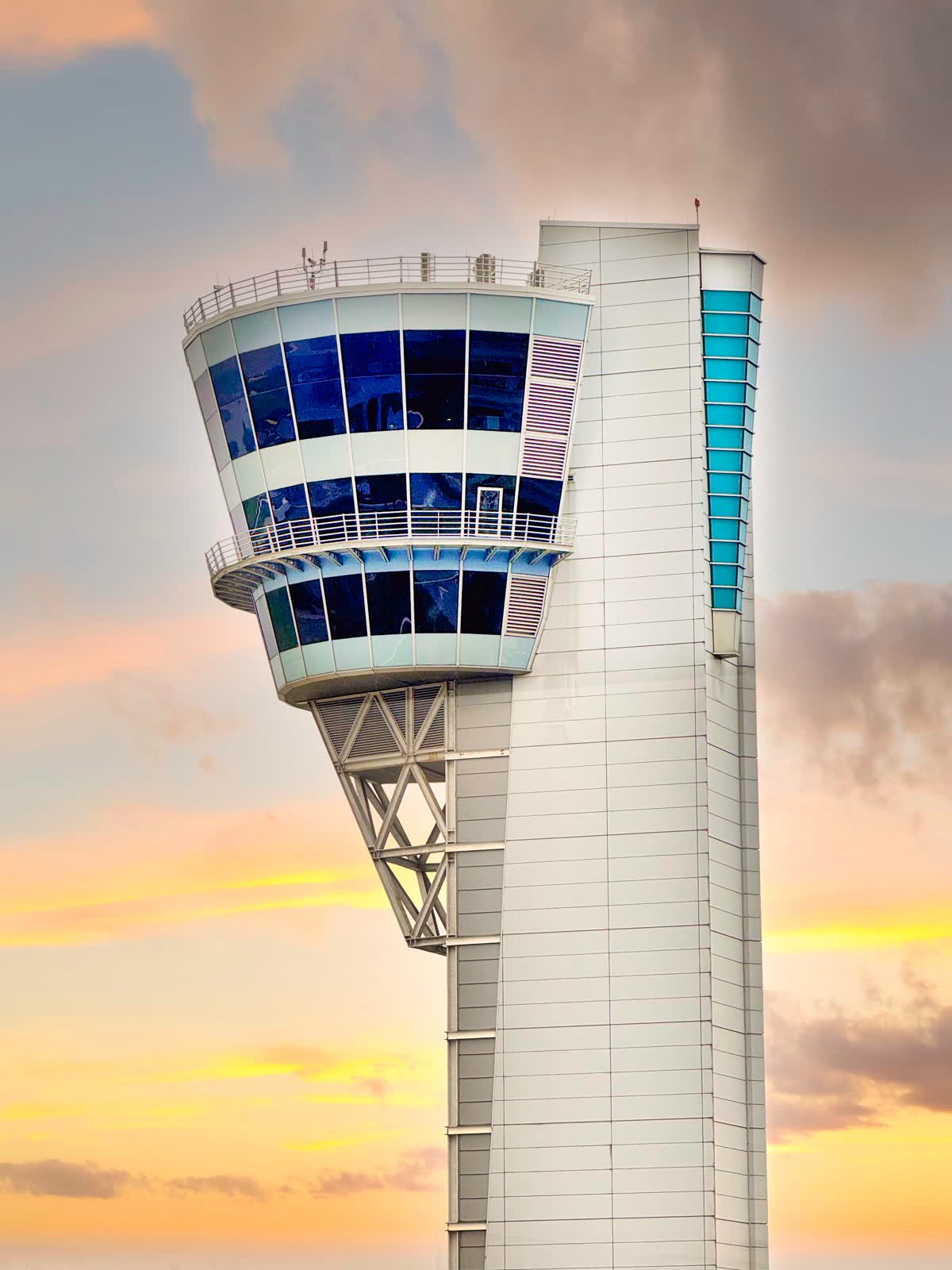
The Federal Aviation Administration lifted a nationwide ground stop on Friday evening after a communications failure halted every departure in the United States for more than four hours, stranding thousands of travellers at airports across the country.
The stoppage began after the FAA started experiencing instability in radar and communications systems at air traffic control centres at 3:36 p.m. Eastern Time. The agency soon issued a ground stop, halting flights around the country, and lifted it at about 8:15 p.m. Eastern Time — more than four hours later.
It was the third nationwide ground stop in American aviation history, and the longest since the September 11, 2001, terrorist attacks.
What went wrong
Transportation Secretary Sean Duffy told reporters at the White House that outdated air traffic control technology was to blame for the communications outage that forced the FAA to ground flights across the country.
“What we have is an incredibly old air traffic control system,” Duffy said, adding that switches and routers got “overloaded” in the system, which still runs on analog technology. “They started to give us inconsistency in the data from those routers, and because of that we shut the system down.”
Duffy said the FAA “deployed fixes” that were able to bring the networks back online, and that newer equipment had not suffered the same failure. Homeland Security Secretary Markwayne Mullin offered a preliminary explanation involving patches, new equipment and new technology, saying the newer technology was “overwhelming the older system.” The briefing did not establish whether an upgrade contributed to the disruption.
The outage appeared to be affecting a telecommunications network overseen by L3Harris Technologies, according to two airline officials cited by Reuters.
The scale of the disruption
| Measure | Figure |
|---|---|
| Length of the ground stop | More than 4 hours |
| Planes in the air when it began | More than 3,500 |
| Planes in the air by 8 p.m. | Fewer than 400 |
| Flights cancelled (Friday) | More than 6,600 |
| Flights delayed (Friday) | More than 8,600 |
| Share of Friday departures cancelled or not flown | 31.45% |
Cancellation and delay figures: FlightRadar24, via Reuters; share of departures: Cirium.
Flights already in the air were allowed to continue to their destinations; only departures were halted. Exceptions were made to allow critical medical evacuation, life-saving cargo and law enforcement flights to continue operating. By 8 p.m., fewer than 400 airplanes were in the sky, down from more than 3,500 when the stoppage was issued. Air Canada cancelled all flights to and from the United States.
Duffy said airspace reopened at 8:15 p.m. Eastern Time, but warned that departures would resume gradually and it would take time for airlines to restore normal operations. He and Mullin said they expect air traffic schedules to be disrupted through the weekend. Duffy also made a plea to Congress for $50 billion for system upgrades.
No sign of a cyberattack — so far
Mullin told reporters outside the White House that there was no evidence of a cyberattack so far, but that officials had not ruled one out. “We’re still looking at it. We’re not ruling out anything,” he said.
The failure is the latest and most dramatic sign of strain on a U.S. air traffic control system beset by aging technology, equipment and communications problems and a shortage of several thousand controllers. Duffy described the response to the fixes as an indication of a legacy-network problem — his preliminary assessment, rather than a completed investigation into the cause.
For travellers, the advice is the same as it was on Friday night: check with your airline before heading to the airport, because the backlog from the longest ground stop in a quarter of a century will take days to clear.
Sources: Reuters; USA Today; The Tennessean; Milwaukee Journal Sentinel; Airways Magazine.


One thought on “FAA Lifts Nationwide Ground Stop After Four Hours as Routers Fail”