









SpaceX sent Starship into orbit on Friday, but its attempt to recover both halves of the giant rocket at its Texas launch site ended early when the Super Heavy booster was diverted into the Gulf of Mexico.
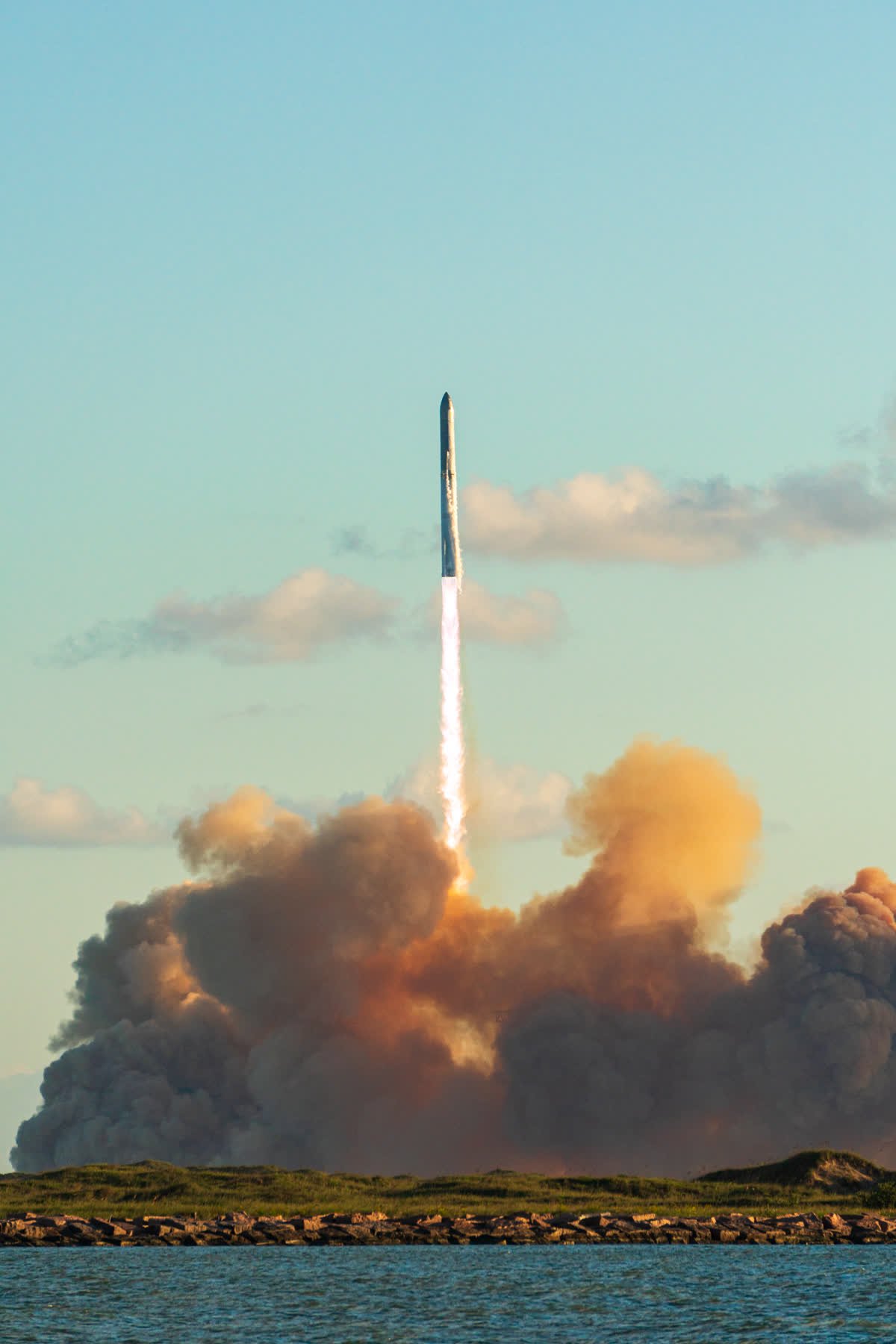
Starship Flight 15 lifted off from SpaceX’s Starbase facility in South Texas at 4:47 p.m. Central Time on Friday, November 13, powered by 33 Raptor engines on its Super Heavy booster. The 124-metre-tall vehicle climbed as planned, and about two and a half minutes after launch the upper stage ignited its engines and separated from the booster in a manoeuvre known as hot-staging.
The flight plan called for Super Heavy Booster 22 to fly back to the launch tower about six and a half minutes after liftoff and be caught by its mechanical arms, known as chopsticks. Instead, the company called off the catch and directed the booster towards a designated area offshore. It reached the water approximately six and a half minutes after liftoff, with a large fireball visible during its final descent.
Why the catch was called off
SpaceX commentator Dan Huot explained on the launch broadcast that the booster had aborted the catch itself. “We were initially go for a catch but in the later stages of the coast the booster aborted itself for a GNC [Guidance Navigation and Control] issue that it detected and that put it into its contingency landing offshore,” Huot said.
The aborted recovery does not necessarily mean the booster suffered a mechanical failure. SpaceX has built safety checks into the flight sequence that allow the vehicle to be diverted away from the tower if the conditions for a catch are not met.
The attempt was the first to catch a Version 3 Super Heavy booster, the newest version of the vehicle, equipped with Raptor 3 engines. SpaceX has caught three earlier Version 1 boosters and reflown two of them, with the last successful tower catch in March 2025.
Ship reaches orbit for the second time
While the booster recovery ended unsuccessfully, the upper stage continued its journey. Its engines completed the initial ascent burn just over eight minutes after liftoff. A second engine firing, lasting approximately 20 seconds, placed the spacecraft into an orbit about 275 kilometres above Earth.
“Starship reached Earth orbit for the second time in history,” Huot said during the SpaceX webcast. The first time was on Flight 14, on September 28.
The spacecraft subsequently deployed 26 Starlink V3 satellites, completing the operation over approximately 42 minutes. Ship 42 is expected to spend more than 22 hours in space, completing about 14 orbits before a planned return to Starbase on Saturday afternoon.
What to watch next
If all systems remain healthy, the ship is expected to attempt a catch at the launch tower at about 3:20 p.m. Central Time on Saturday, November 14. If the catch succeeds, it will be the first recovery of a Starship upper stage returning from orbit. If a catch proves too difficult during the final approach, the ship will splash down in the Gulf of Mexico instead.
Friday’s mission was SpaceX’s most ambitious Starship flight to date, hoping to demonstrate that the revolutionary rocket is fully reusable by recovering both its first and second stages. Half of that goal is now done. The other half gets its chance on Saturday.
Sources: Space.com; Associated Press; Spaceflight Now; The Motley Fool.




One thought on “Starship Reaches Orbit on Flight 15 as Booster Catch Fails”