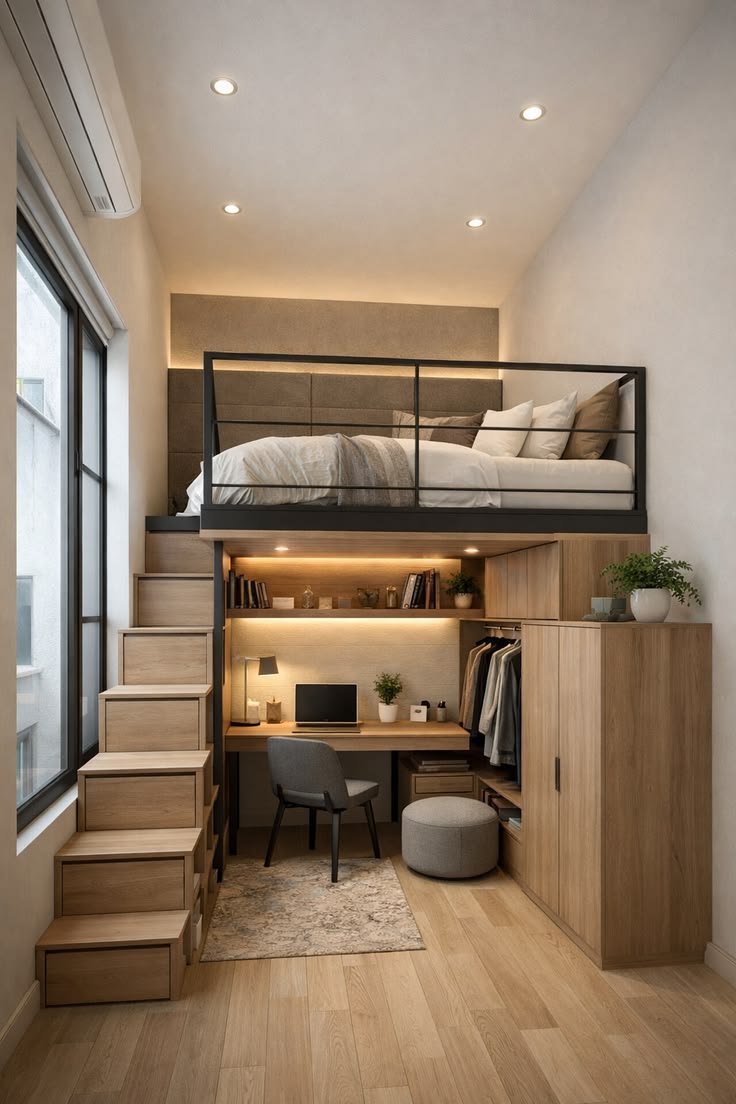









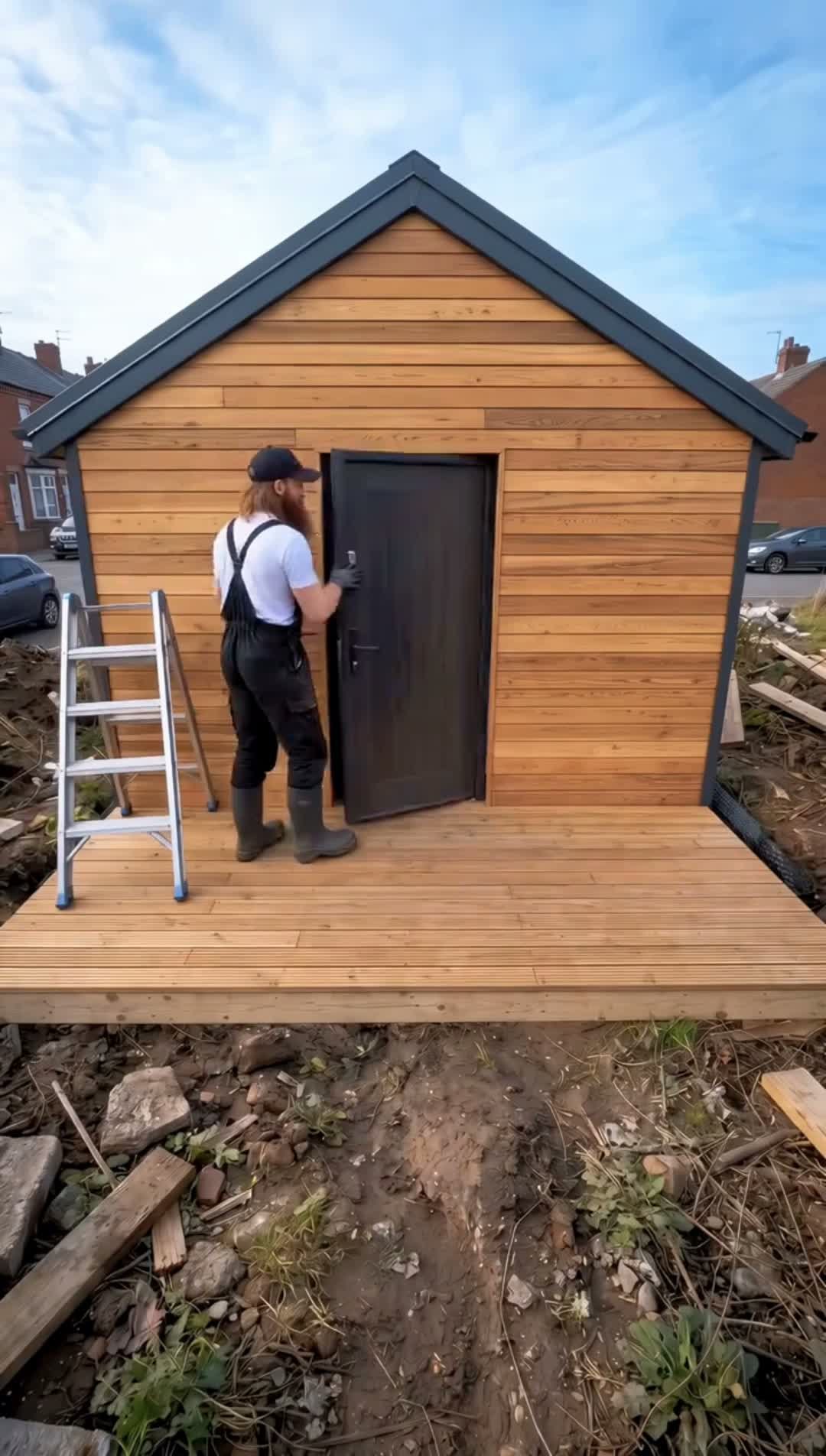
A woman living in a mud pit with her dog gets a two-storey home built over the very hole she slept in. A builder turns a gap between two brick houses — barely wider than a car — into a two-level home with a bedroom below ground. Another builds a cabin with a sun deck on top of a city roof. These tiny-home builds pull millions of views, and the question everyone asks is the same: what does something like this actually cost? The figures below are typical US estimates for a small timber-frame tiny home of roughly 150–250 square feet, built the way the videos show — they are estimates, not a quote from the builders in the clips.
The three builds, and what drives their cost
The mud-pit home is the most complete of the three: excavation, a gravel and membrane base, a framed lower level, a cedar-clad cabin above with a deck, a fitted kitchen, wood floors and a furnished bedroom below. The alley build does the same trick in a far tighter space, using pallets and reclaimed timber for the lower level to keep material costs down. The rooftop cabin adds structural checks, materials hoisted to roof level, and a large finished deck — labour and access are what push its price up.
BASIC — the salvage build, about $8,000–$15,000
Reclaimed timber and pallets, a simple membrane-lined base, basic cladding, minimal electrics (a single circuit and lighting), no fitted kitchen — a camp-style interior with a bed platform and storage. This tier is only realistic with heavy DIY labour and free or cheap reclaimed materials.
STANDARD — the finished cabin, about $25,000–$40,000
New timber framing throughout, proper damp-proof membrane and drainage base, cedar or fibre-board cladding, insulated walls and floor, double-glazed windows, a compact fitted kitchen, finished flooring and a furnished sleeping level. This is the level the mud-pit and alley homes in the videos most resemble once finished.
LUXURY — the rooftop finish, about $60,000–$90,000
Everything in Standard, plus structural engineering for the roof, premium decking and railings, full kitchen and bathroom fit-out, climate control, and the labour premium for working at height in a city. Rooftop and other difficult-access sites can add 20–30% in labour alone.
What the headline cost does NOT include
Land is never included — all three builds sit on land the owner already controls. Permits and inspections are extra, and below-ground rooms need proper waterproofing, ventilation and a safe exit to be legal living space in most US jurisdictions; utility connections (water, sewer, power) can add thousands more. Treat any video that skips these as entertainment first and a budget second.
The bottom line
The space was never the expensive part — the finish is. A tiny home in an impossible place can start under $15,000 in salvage and sweat, land around $25,000–$40,000 finished to live in, and climb past $60,000 when the site itself fights back, like a rooftop.
Sources: Typical US tiny-home build cost ranges compiled from HomeAdvisor and Fixr 2025–2026 cost guides. Videos: builder clips shared with ARQ Media.