










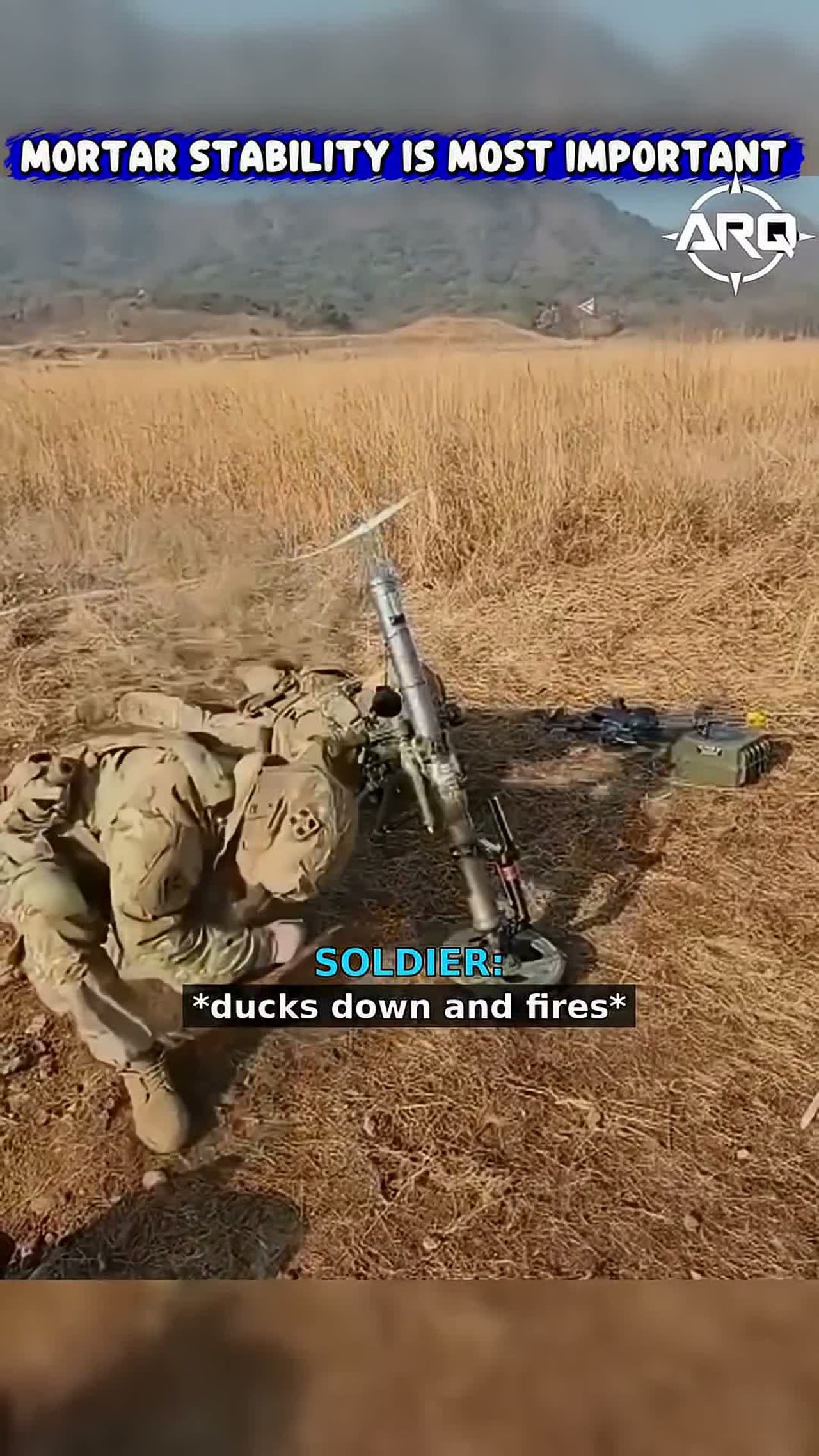
The clip is short and embarrassing: a soldier loads a mortar round, ducks down and fires — and the whole weapon tips over in the dirt. The on-screen text says it plainly: “MORTAR STABILITY IS MOST IMPORTANT.” It is not a joke about clumsiness. It is the first rule of mortar gunnery.
What holds a mortar up
A light mortar like the US M224 60mm is basically a tube on a baseplate with a two-legged bipod. There is no recoil system, no carriage, no anchor — the only thing keeping it in place is the baseplate pressed into the ground and the bipod legs set firm. When the round fires, the recoil drives the baseplate down and back. If the ground is soft, uneven or the plate was never seated, the tube moves — and a tube that moves is a weapon that is no longer aimed where the crew thinks it is.
Seating the baseplate
That is why mortar crews “seat” the baseplate before firing: they press it into the ground, stomp it down, and check the bipod legs are even and locked. On hard or frozen ground the plate can skate; on soft ground it can sink unevenly. Crews re-check after the first rounds, because every shot drives the plate a little deeper and can change the aim. Skip that step and the first round can do what the video shows — tip the weapon over, scatter the crew, and send the round nowhere near its target.
Why it matters beyond accuracy
A tipped mortar is not just a missed shot. A round fired from an unstable tube can land short, endangering friendly troops, and a crew scrambling around a fallen weapon is a crew not watching its surroundings. That is why mortar training drills the setup until it is automatic: baseplate seated, bipod level, legs locked — then, and only then, load.
The bottom line
The soldiers in the clip were fine — they got up and checked the weapon. But the lesson is the caption: in mortar work, stability is not a detail. It is the whole job.
Sources: Compiled from US Army mortar training doctrine (TC 3-22.90, Mortar Gunnery) describing baseplate seating and bipod setup. Video: training clip shared with ARQ Media.


One thought on “Why Mortar Stability Is Everything: What Happens When the Baseplate Isn’t Seated”