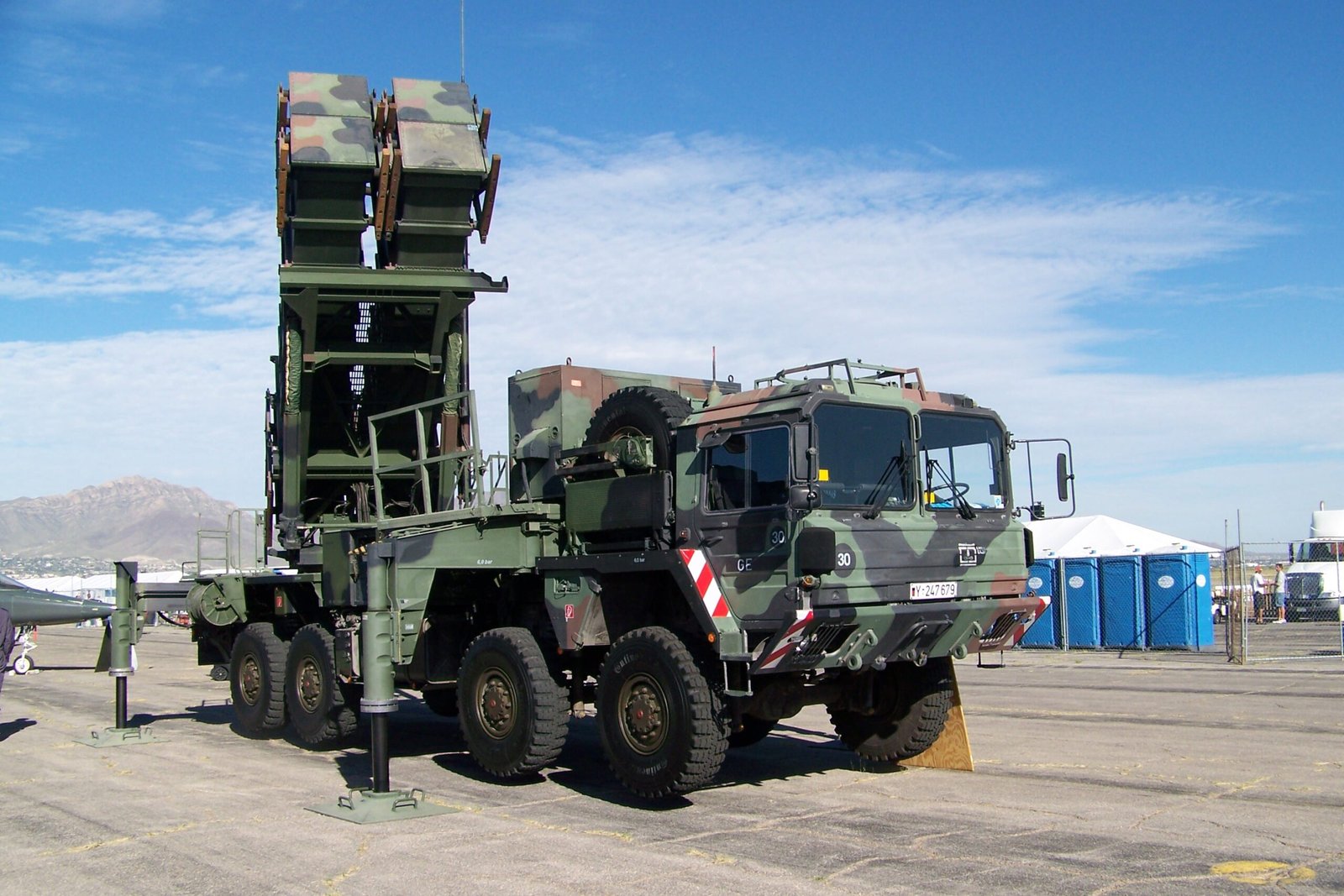







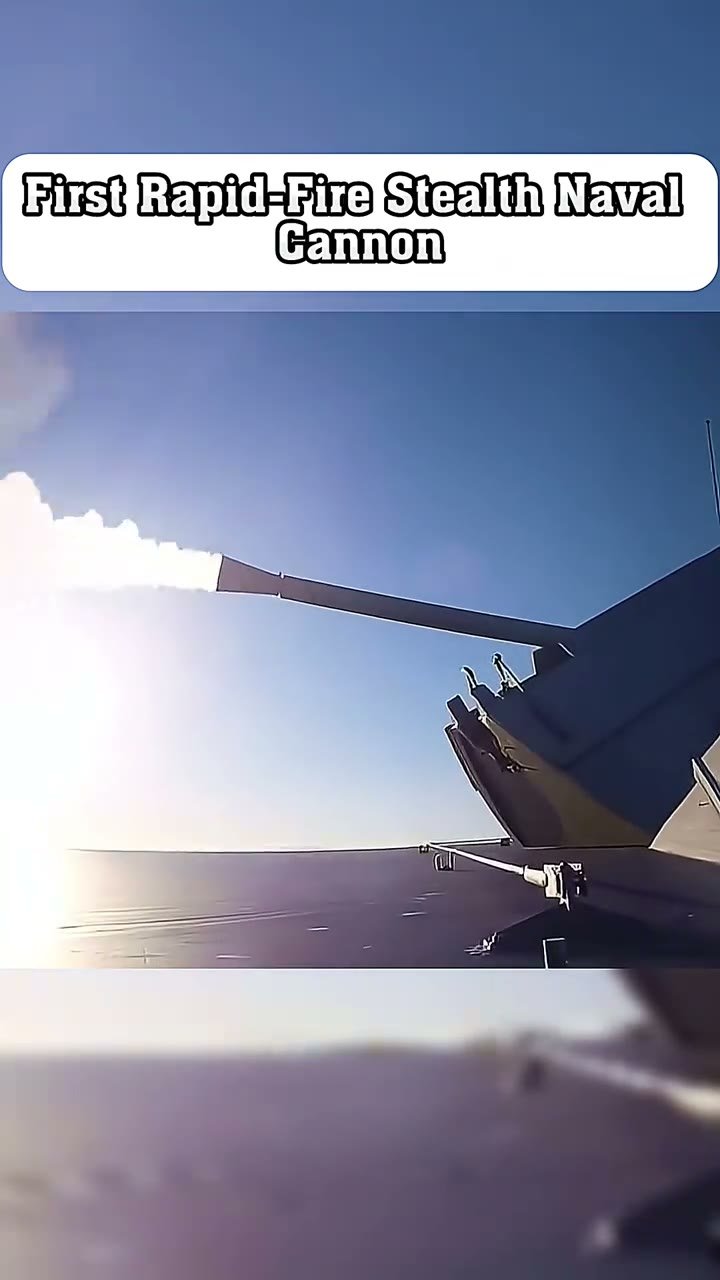
A viral compilation making the rounds this week stitches together three very different kinds of military firepower: a mortar system mounted on the back of a light truck, a naval cannon firing from a stealth-shaped turret, and a twin naval gun billed as a 5,000-rounds-per-minute cannon. Each one answers a different problem on the modern battlefield — and together they show how far weapons have moved from the heavy, fixed guns of the past.
The truck-mounted mortar: artillery that never stays still
The opening segment shows a light 4×4 utility vehicle fitted with a rack of mortar tubes, crewed by soldiers working in the open. Mortars are the infantry’s own artillery: short, high-angle tubes that lob explosive rounds over hills and buildings at targets a rifle cannot reach.
Mounting them on a truck is about survival. A mortar gives away its position the moment it fires, and counter-battery radar can plot that position in seconds. A vehicle-mounted system can fire a short mission and drive off before return fire arrives — the tactic known as shoot-and-scoot. Light vehicles also go places heavier self-propelled guns cannot, from desert tracks to forest roads, which is why mortar carriers remain in service with armies around the world, from the US Army’s Stryker mortar carrier to lighter commercial-vehicle conversions.
The stealth naval cannon: a warship’s main gun, redesigned
The second segment shows a long-barrelled naval gun firing from a low, angular turret. Modern warship guns look like that for a reason: the faceted shape is designed to deflect radar waves rather than bounce them back, shrinking the ship’s radar signature.
Naval guns in this class typically fire medium-calibre shells — 76mm or 127mm (5-inch) — at targets on land, at sea and, in some cases, in the air. Guided shells have extended their reach far beyond the old unguided range, letting frigates and destroyers support troops ashore from over the horizon. The gun remains on warships even in the missile age because it is cheap per shot, hard to jam, and can keep firing long after a missile magazine runs dry.
The 5,000 RPM cannon: a wall of steel against incoming missiles
The closing segment shows a twin-barrelled naval gun on a ship’s bow, captioned as a 5,000-rounds-per-minute cannon. Rates of fire in that range belong to close-in weapon systems — the last line of defence that throws up a literal wall of shells against incoming anti-ship missiles, aircraft and small boats at very short range.
Systems of this type, such as Russia’s AK-630 family and its equivalents, trade accuracy for volume: at thousands of rounds per minute, a one- or two-second burst puts hundreds of projectiles into the path of a threat. They are a weapon of last resort, used when longer-range missiles and guns have already missed — and the footage of them firing is dramatic precisely because of the sheer volume of fire.
Why the compilation works
None of these three systems is new on its own. What the compilation captures is the direction of travel: weapons are getting lighter and more mobile on land, stealthier at sea, and faster-firing where defence is measured in seconds. The mortar truck, the stealth turret and the rapid-fire cannon each solve the same basic problem — hit first, and do not get hit back — in a different domain.
Sources: US Army and US Navy public fact files; manufacturer public descriptions of mortar carriers, naval guns and close-in weapon systems.