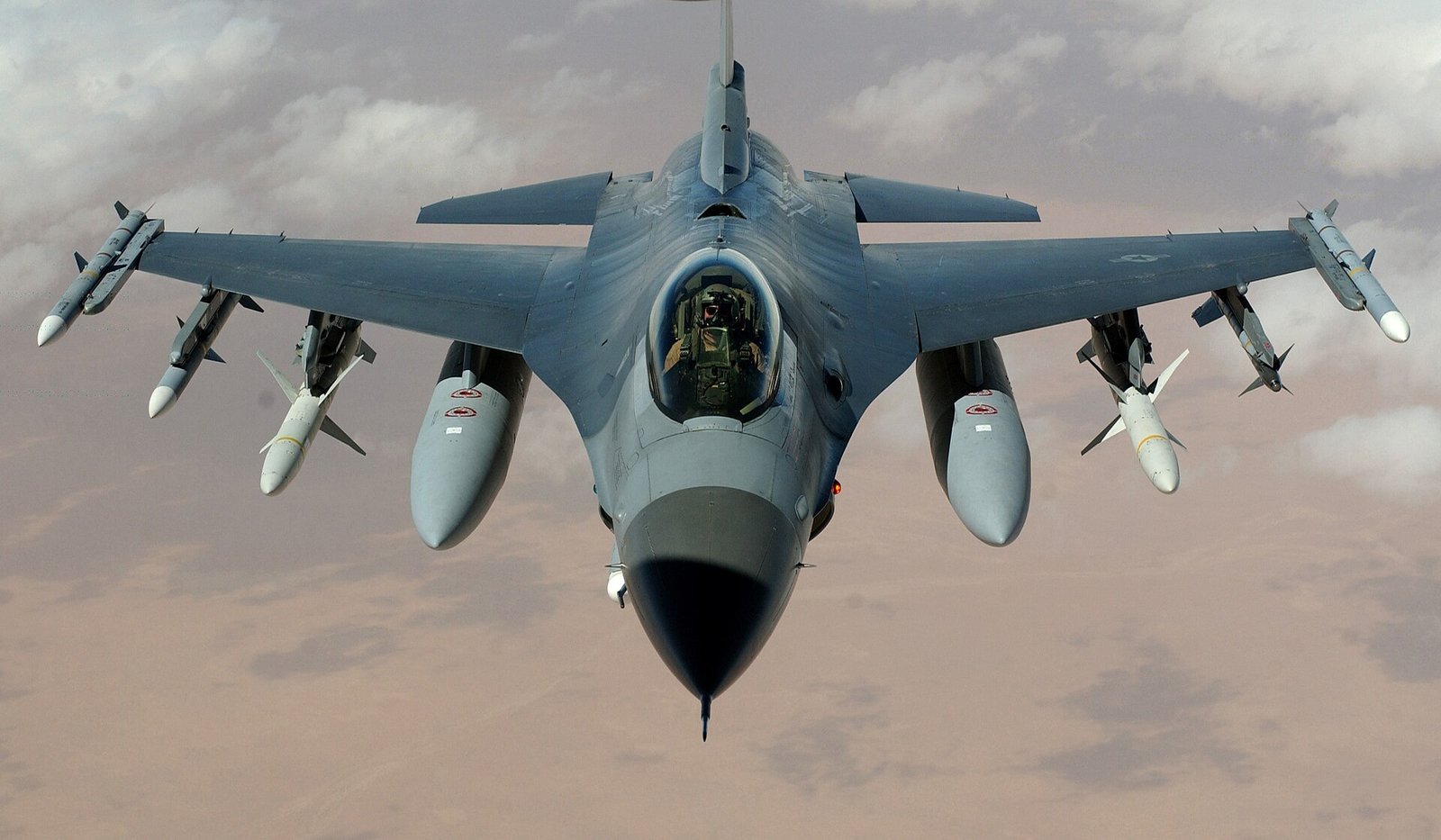








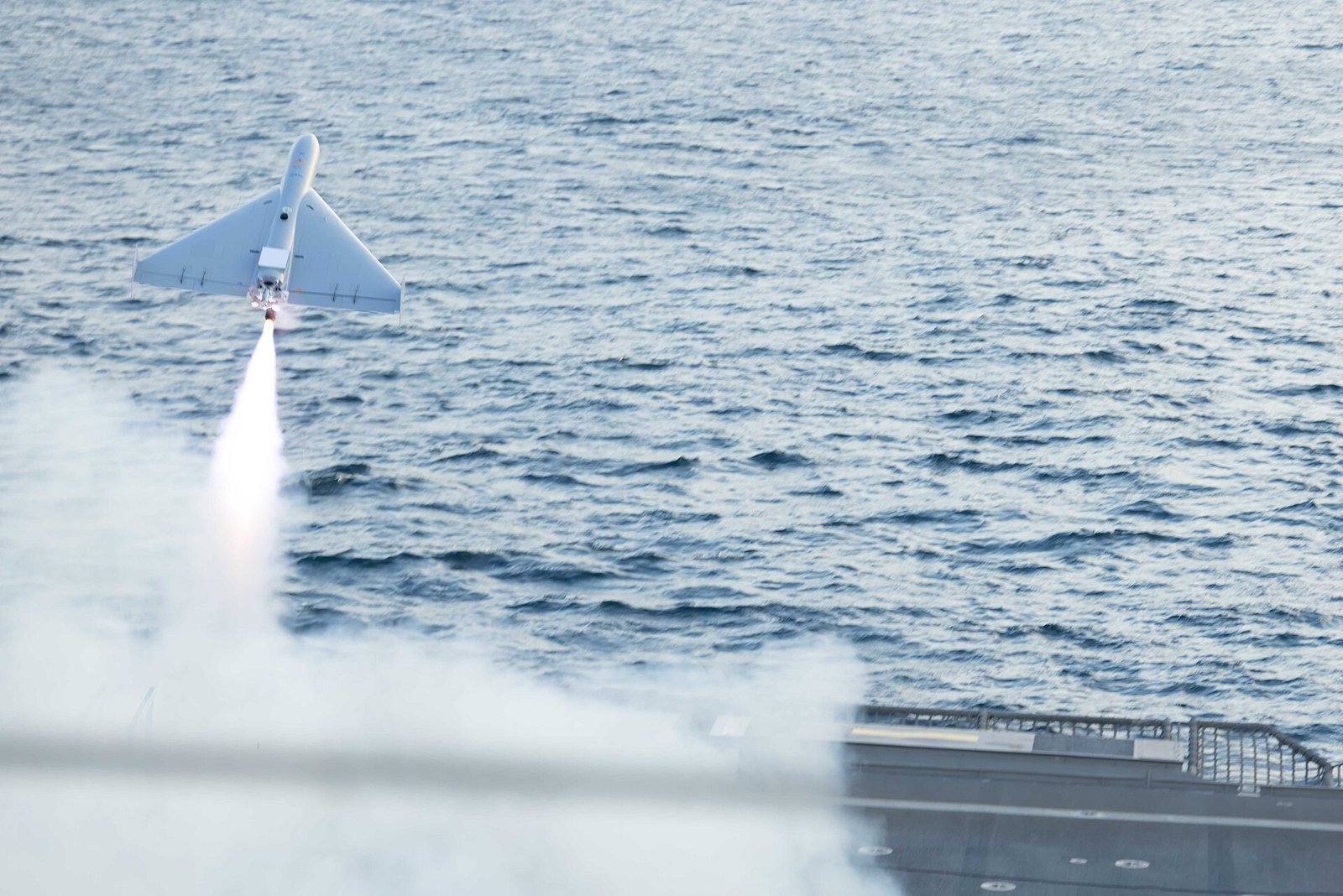
It looks like a toy airplane that grew up angry: a fat central body, a triangular delta wing, no pilot, no landing gear worth mentioning. Delta-wing one-way attack drones of the Shahed type have become one of the defining weapons of modern war — and when soldiers open a captured one up in the desert, as in this footage, the inside explains exactly why the design works.
The payload: the whole point of the aircraft
Up front sits the warhead — the “payload” the troops point to first. On Shahed-type drones this is a high-explosive charge of roughly 30–50 kilograms class, wrapped in the nose section. The entire aircraft is built around delivering this one component to a coordinate. Everything else — wing, engine, fuel — exists to serve it.
The guidance system: cheap, simple, hard to jam completely
Behind the warhead sits the guidance unit: a satellite-navigation receiver (GPS/GLONASS class) backed by a simple inertial system. There is no pilot link to cut and usually no camera at all. The drone is programmed before launch with a route and a target, flies it at low altitude, and dives at the end. Its simplicity is its strength: there is very little to hack, jam or shoot down electronically, so air defenses must physically destroy it.
Fuel storage and engine: range from a lawnmower-class motor
The middle of the fuselage is mostly fuel tank — which is how a drone this small reaches targets hundreds, even over a thousand, kilometers away. At the back sits a small piston engine (on the Shahed-136, a copy of a German light-aircraft engine of about 50 horsepower) driving a pusher propeller. It is loud, slow by missile standards at around 185 km/h, and utterly expendable — the engine only has to work once.
Why this design changed air defense math
A drone built from commercial-grade parts can cost a small fraction of the interceptor missile fired to stop it. Defenders now answer with guns, jammers, interceptor drones and cheap autocannon — a whole new layer of warfare built around one idea this opened-up airframe proves: in modern war, simple, numerous and good-enough beats exquisite and rare.
Sources: Ukrainian and Western military technical assessments of Shahed-136/Geran-2 wreckage; U.S. Department of Defense public statements on one-way attack drones and the LUCAS program.