


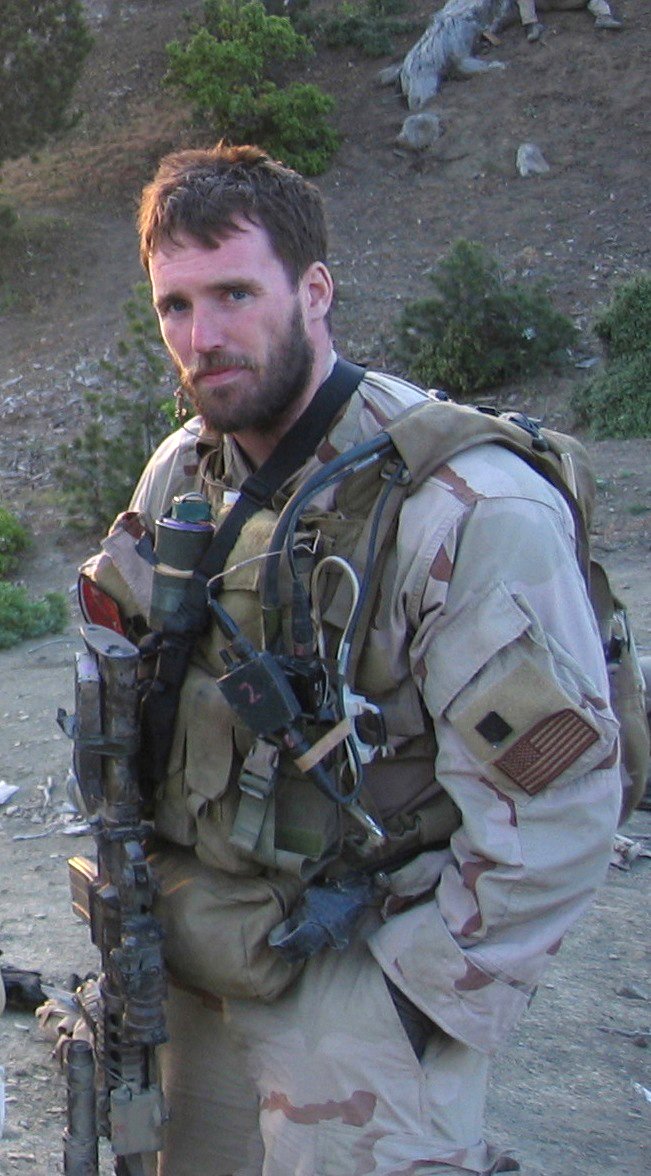
On June 28, 2005, a four-man Navy SEAL reconnaissance team was discovered high in the mountains of Kunar Province, Afghanistan. Within hours, Lt. Michael P. Murphy and his teammates — Matthew Axelson, Danny Dietz and Marcus Luttrell — were fighting for their lives against a far larger Taliban force in the mission known as Operation Red Wings.
A call made in the open
Pinned down, wounded, and with their communications failing in the steep terrain, the team could not reach headquarters to call for help. Murphy made the decision that defines his legacy: he moved into open ground — fully exposed to enemy fire — to get a satellite signal. He made the call, gave his team’s position, and was shot while doing it. He picked the phone back up and finished the transmission before fighting on.
The rescue force that answered his call paid a terrible price: a quick-reaction helicopter, Turbine 33, was shot down as it arrived, killing all 16 men aboard. Murphy, Axelson and Dietz were killed on the mountain. Luttrell, the lone survivor, was sheltered by Afghan villagers until his rescue — and it was Murphy’s call that set that rescue in motion.
The first Navy Medal of Honor of the Afghan war
Murphy was posthumously awarded the Medal of Honor, the first member of the U.S. Navy to receive it for actions in Afghanistan. A U.S. Navy destroyer, USS Michael Murphy (DDG 112), carries his name. The workout known to millions as “Murph” — a one-mile run, 100 pull-ups, 200 push-ups, 300 squats, another mile — is performed every Memorial Day in his memory, based on a training session he himself used to do.
His teammates’ families have said the same thing in different words: on the worst day of their lives, the man in charge walked into the open so his men might live. That is the whole story, and it needs nothing added.
Sources: U.S. Navy and Naval History and Heritage Command records on Lt. Michael P. Murphy and Operation Red Wings; Medal of Honor citation.