





The United States does not keep its nuclear weapons in one place, on one system, or under one command’s single point of failure. It spreads them across three completely different forces — known together as the nuclear triad. The logic is simple and brutal: even a devastating surprise attack could not destroy all three legs at once, so an adversary can never escape retaliation. That guarantee is the foundation of nuclear deterrence.
Leg 1: Missiles in the ground
Across the northern Great Plains, the Air Force keeps intercontinental ballistic missiles — the Minuteman III force — in hardened underground silos, on alert around the clock. Land-based missiles are the fastest leg to launch and the most accurate, but their silo locations are known, which is exactly why the other two legs exist.
Leg 2: Submarines at sea
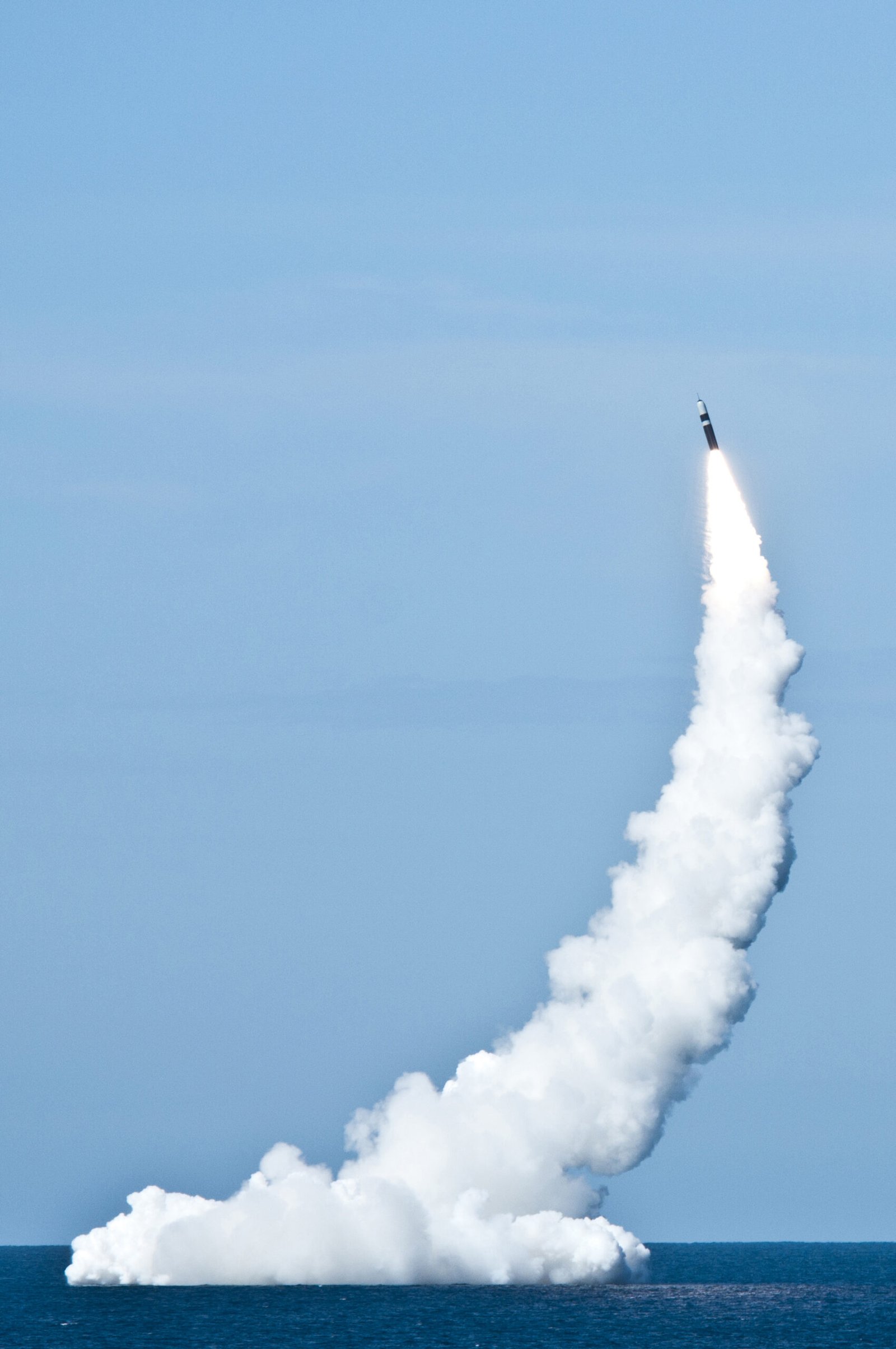
The most survivable leg hides beneath the ocean. The Navy’s Ohio-class ballistic missile submarines each carry Trident II missiles, and at any given time several of these boats are on patrol in locations no adversary can reliably track. A submarine force that cannot be found cannot be destroyed in a first strike — military planners consider this leg the ultimate insurance policy.
Leg 3: Bombers in the air
The air leg is flown by long-range bombers — today principally the B-52 Stratofortress and the stealthy B-2 Spirit, with the new B-21 Raider being developed to join them. Bombers are slower than missiles, but uniquely flexible: they can be launched as a visible signal of resolve, held in the air, and recalled before weapons are released. No missile can be called back; a bomber can.
Why three legs instead of one
Each leg covers the others’ weaknesses. Silos are vulnerable but fast. Submarines are hidden but communicate slowly. Bombers are flexible but slow to reach a target. Together, they remove any temptation for an enemy to gamble on a disarming first strike — which is precisely the point. The triad is not about fighting a nuclear war. It is about making sure one never starts.
Sources: U.S. Department of Defense and U.S. Strategic Command public descriptions of the nuclear deterrent forces; U.S. Air Force and U.S. Navy public fact files on Minuteman III, Ohio-class submarines and the bomber fleet.