








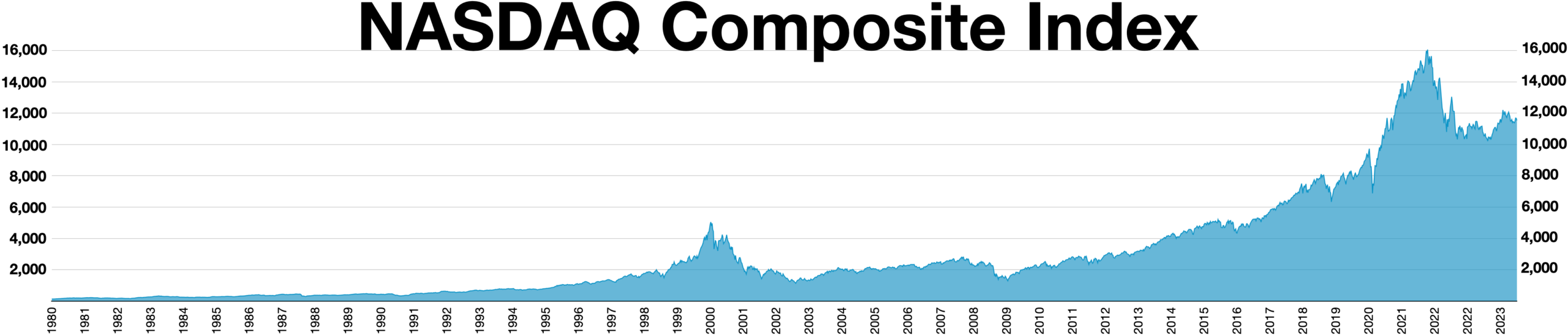
The Nasdaq 100 fell into a correction on Friday, dropping more than 10 percent from its October 6 peak, Bloomberg reported — the index’s third correction of 2026. The trigger was a brutal round of earnings from some of America’s biggest companies, and the question behind it is now the central one in global markets: how much can the artificial intelligence boom cost before investors stop paying for it?
A brutal end to October
Friday, October 30, was the worst day for American tech stocks since June. The Nasdaq Composite fell about 2.9 percent, the Nasdaq 100 fell 3.5 percent, and the Philadelphia Semiconductor Index plunged 7.2 percent. The S&P 500 lost about 1.8 percent, while the Dow held up far better — a sign that the damage was concentrated in technology rather than spread across the whole economy.
Reuters estimated the Nasdaq 100 was on course to lose more than $2 trillion in market value across October, a monthly decline of more than 5.8 percent, snapping a two-month winning streak. Together, the Nasdaq 100 and S&P 500 shed nearly $3.3 trillion in October, according to market estimates. The Nasdaq 100 had already corrected twice this year — once at the outbreak of the war with Iran, and once in a semiconductor selloff over the summer.
The earnings that broke the mood
| Company | What happened |
|---|---|
| Intel | Shares fell about 29 percent — its worst one-day loss on record — after guiding fourth-quarter revenue to $15-16 billion, below the roughly $17 billion Wall Street expected |
| Alphabet | Fell more than 12 percent in a single day, erasing roughly $500 billion in value, after search advertising revenue came in below estimates |
| Amazon | Reported negative free cash flow of $42.4 billion over the trailing 12 months, while guiding to about $220 billion in capital spending for 2026 |
| Fell about 29 percent on a revenue forecast below estimates | |
| Nvidia | Fell about 5 percent, leaving it roughly 12 percent below its 52-week high |
Intel’s collapse was the sharpest single blow. The chipmaker warned it would burn cash this year, citing a weak market for personal computers, manufacturing hurdles and heavy spending to expand production. Amazon’s problem was different: it is spending more cash than it earns, with third-quarter capital spending of about $77 billion. Alphabet’s third-quarter capital spending reached $51.4 billion, up 114 percent from a year earlier, while its free cash flow ran a deficit of about $9.1 billion.
The trillion-dollar question
Step back, and the numbers behind the selloff are staggering. Morgan Stanley expects total AI infrastructure capital spending to exceed $1 trillion next year, while JPMorgan estimated global AI capital spending at about $900 billion this year. Amazon alone has guided to roughly $220 billion of capital spending in 2026; Alphabet has guided to $195-205 billion.
Much of that spending is being funded with debt, which is why the Federal Reserve’s posture matters so much. The Fed held rates steady on October 28 in a split vote, and futures markets are pricing roughly an 83 percent chance of a rate increase in December. Higher borrowing costs make trillion-dollar buildouts harder to justify — and make investors less patient about waiting for the payoff.
That payoff is the real argument. The optimists say AI infrastructure is this generation’s railroad or internet: expensive to build, enormously valuable once built, and foolish to stop halfway. The skeptics say the spending has outrun any plausible near-term return, and that the pattern of 2026 — a correction in the spring, another in the summer, and now a third in the fall — shows a market repeatedly discovering it paid too much, too fast.
Correction, not crash — yet
It is worth keeping the scale in view. A correction is a fall of 10 percent or more from a recent peak, and most corrections happen inside longer uptrends; only a minority become bear markets. The Nasdaq 100’s three corrections this year have all, so far, been followed by recoveries. The index is still far above where it stood at the start of the decade, and the broader economy — jobs, consumer spending, corporate profits outside tech — has not shown the kind of collapse that turns a market rout into a recession.
But the risks are stacking in one direction. OpenAI, the company at the center of the boom, recently cut its external fundraising target from $30 billion to $20 billion and saw its valuation marked down from about $1.4 trillion to about $1.25 trillion, according to the Financial Times. When even the boom’s flagship company trims its ambitions, investors notice.
What to watch next
The next tests come quickly: whether the Nasdaq 100 holds above its recent lows, whether the Fed signals anything new about December, and whether the next round of big-tech earnings shows spending slowing — or accelerating further. The midterm elections on Tuesday add another variable, but the market’s question will outlast them: at some point, the AI buildout has to produce profits to match its price tag. October was the month investors started asking, out loud, when that point arrives.
Sources: Reuters, Bloomberg, Financial Times, Yahoo Finance.

One thought on “The Nasdaq’s Third Correction of 2026: What the AI Spending Reckoning Is Really About”