


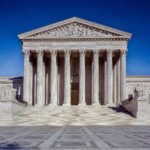
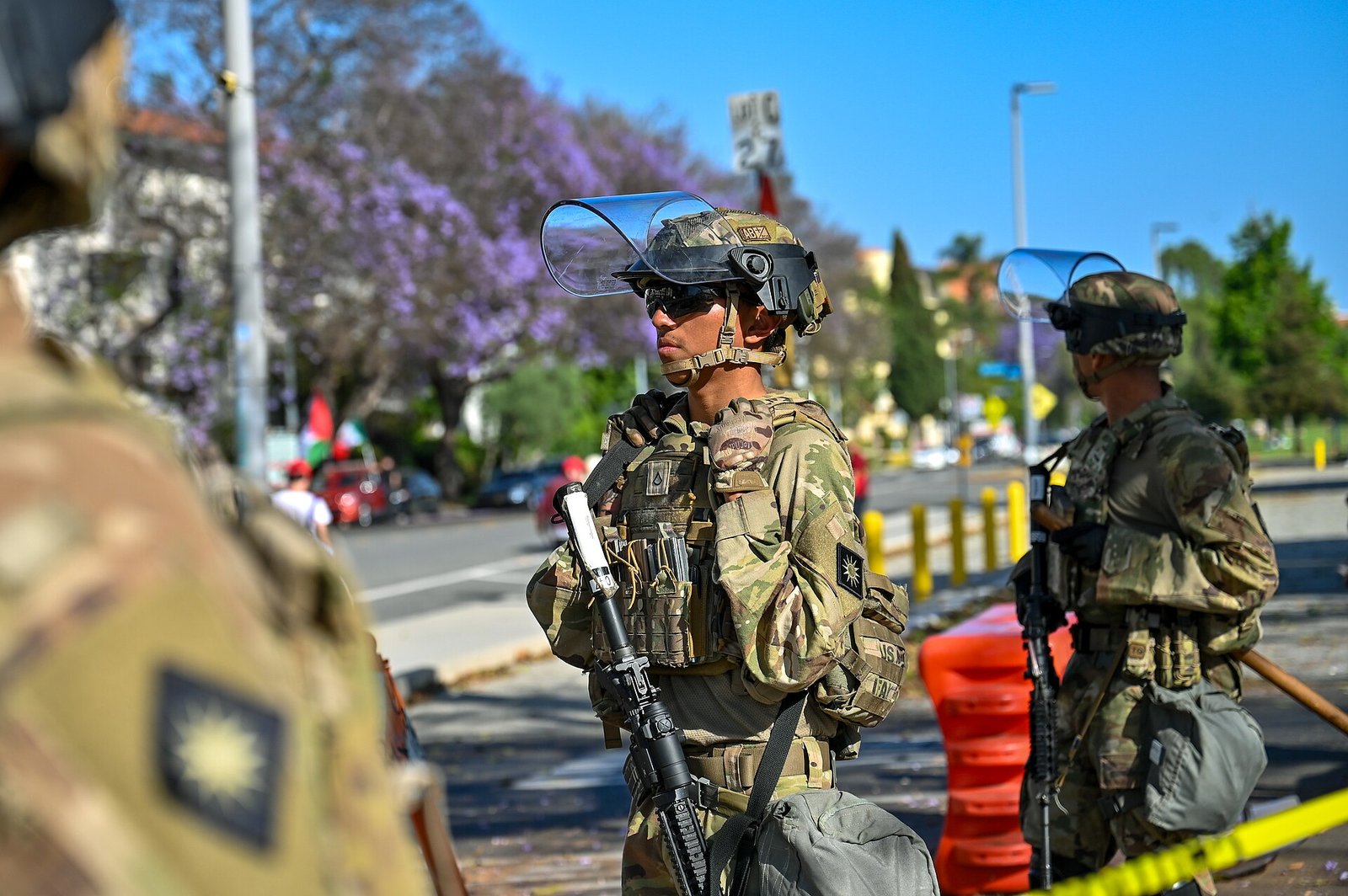
A federal appeals court has ruled that President Donald Trump’s deployment of 4,000 California National Guard troops to the Los Angeles area last year was unlawful, delivering a major legal defeat for the administration’s use of troops inside the United States.
The 2-1 decision by a three-judge panel of the U.S. 9th Circuit Court of Appeals was issued on Friday, October 23, and reported by Military.com on Monday, October 26. The court found that Trump’s use of the Guard was not within a “range of honest judgment,” rejecting the administration’s argument that there was a rebellion in Los Angeles that justified federalizing the troops.
The case and the reversal
The ruling upheld an order by U.S. District Judge Charles R. Breyer that blocked the deployment of 4,000 Guard members to the Los Angeles area and returned control to California Governor Gavin Newsom. The troops have since left, so the ruling does not move a single soldier. What it changes, legal observers noted, is the law governing future deployments.
The panel’s decision reversed its own earlier position. In June 2025, the same panel had paused Breyer’s order and allowed the Guard to stay. This time, Judge Eric D. Miller joined Judge Jennifer Sung in the majority, while Judge Mark J. Bennett dissented. Sung wrote the majority opinion, and Miller wrote separately.
A key factor was a Supreme Court decision in December in a fight over sending troops into Chicago. The justices read the law to allow a Guard call-up only when the regular military cannot get the job done. The 9th Circuit applied that reading and held that the administration had not made the required threshold showings.
What the law requires
Trump relied on 10 U.S.C. Section 12406, which lets a president federalize the Guard if there is “a rebellion or danger of a rebellion” or if he “is unable with the regular forces to execute the laws.” The majority held that neither condition was met.
The court found the protests in Los Angeles did not amount to a rebellion. It also read “regular forces” to mean the regular U.S. military, and held the government had not shown it needed the Guard to enforce federal law. “Defendants have not made either of the required threshold showings here,” Sung wrote, according to court reporting. “Thus, they have not carried their burden.”
Bennett dissented, arguing the panel should not have decided the appeal at all because the administration had wanted to drop its appeal, and that the majority applied the wrong legal standard and reached major constitutional questions on limited briefing after the intervening Supreme Court decision.
The majority also refused to dismiss the initial appeal as moot, noting Trump had previously said troops could return and that a merits decision could govern similar action in the future. In a separate order, the panel dismissed another administration appeal concerning an extension of the deployment while retaining the initial case.
California’s reaction
Newsom issued an immediate statement celebrating the ruling. “Today is a crucial day for the rule of law, upholding the Constitution and defending democracy,” Newsom said. “Yet another court has issued a complete rejection of Donald Trump’s illegal, authoritarian takeover of our state’s National Guard.”
California Attorney General Rob Bonta issued his own statement: “Once again, the courts have rejected the Trump Administration’s attempts to circumvent the law for its own political agenda. Deploying the National Guard in Los Angeles with no rhyme or reason was a clear example of federal overreach, and it will not be tolerated.”
The Justice Department did not immediately respond to requests for comment, according to Military.com and FOX LA reporting.
Why it matters now
The ruling lands less than two weeks before the November 3 midterm elections, as debates over federal power and the use of troops at home remain front and center. It follows precedent set by the Supreme Court in December holding that Trump’s federalization of the Illinois National Guard was illegal.
For governors, the decision strengthens the argument that a president cannot federalize a state’s Guard on a rebellion claim that courts find unsupported by the facts on the ground. For the administration, the path forward could include seeking further review from the full 9th Circuit or the Supreme Court — a step that has not been announced.
The published ruling now binds future panels in the circuit if a president tries a similar deployment in California, and it will be cited in any future dispute over domestic troop deployments elsewhere.
Sources: Military.com, “Trump’s National Guard Deployment in California Illegal, Federal Appeals Court Rules” (Oct. 26, 2026); FOX LA, “Trump’s National Guard deployment to LA was unlawful, court rules” (Oct. 24, 2026); MyNewsLA, “Federal Appeals Court Rules Trump’s National Guard Deployment to LA Was Unlawful” (Oct. 24, 2026).