







Ron Rios treasures his backyard pool. It makes Arizona’s triple-digit summer heat tolerable. So he was furious to learn that his Phoenix suburb might hike his water bill: from $130 a month to, eventually, more than $500 a month.
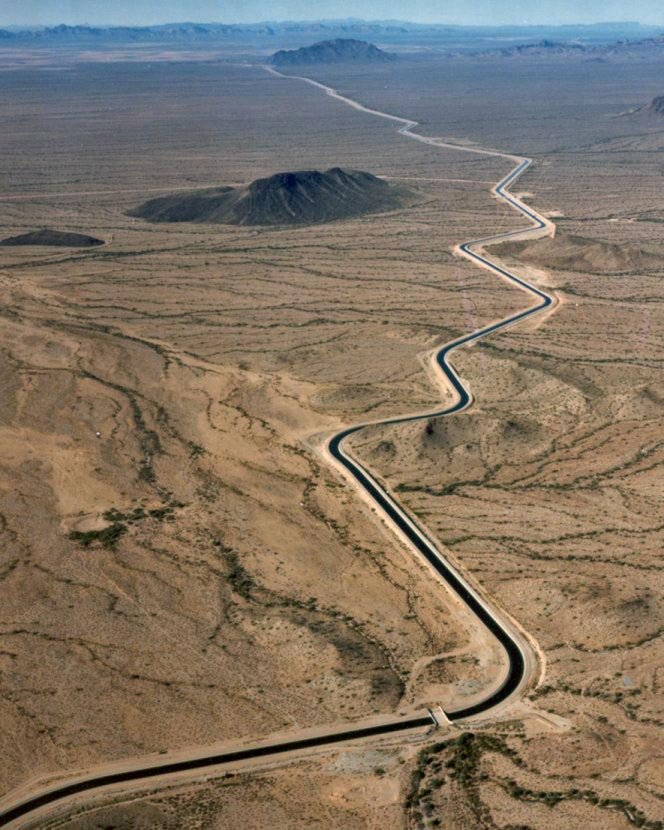
His city is Queen Creek, one of America’s fastest-growing cities — and it shows the dilemma facing communities across the Southwest as the Colorado River dwindles and the water that remains gets more expensive.
Paying for the next 100 years
City leaders say the increase is necessary to fund sweeping investments that would secure Queen Creek’s water supply for the next 100 years. The Colorado River was shrinking, they said, and the city had to adapt — finding new supplies, building new infrastructure and planning for a future in which growth can no longer assume cheap, abundant water.
Marc Skocypec, Queen Creek’s utility director, put it plainly at a recent town meeting: “Cheap water is over.”
It is a blunt message, but it captures a shift rippling across the region. For decades, fast-growing desert cities could expand on the assumption that water would keep flowing at prices set in a wetter era. That era is ending, and the cost of catching up — new wells, new pipelines, new treatment capacity, new storage — is now landing on household bills.
A Southwest-wide squeeze
Queen Creek is not alone. Other Southwest cities face the same questions about how to keep growing in arid places where water is scarce and getting scarcer: how much new supply to buy, how fast to build, and how much of the bill today’s residents should carry for infrastructure meant to last a century.
The politics are as hard as the engineering. A bill that quadruples hits fixed-income households hardest, and residents like Rios hear a number — $500 a month — before they hear a plan. City officials, meanwhile, argue the alternative is worse: a city that keeps growing without securing its water, and faces shortage, rationing or a building freeze later.
The tension is sharpest in places growing fastest. Queen Creek’s growth is the reason its water system must expand, and the reason the expansion is so expensive. New homes need new pipes, new pumps and new supply, all at today’s construction prices.
What comes next
For residents, the immediate question is practical: how fast bills rise, what help is available for households that cannot absorb a jump, and whether the investments actually deliver the century of security leaders promise. For other desert cities watching, Queen Creek is a preview — an early, concrete example of what “cheap water is over” looks like on a monthly bill.
The broader lesson travels beyond Arizona. Wherever growth has outrun a natural resource, the reckoning eventually arrives as a price. In Queen Creek, it has arrived as a number on a water bill — and a warning to every city still pricing water like it will never run short.
Sources: Washington Post reporting on Queen Creek water bills, summarized Oct. 27, 2026.