







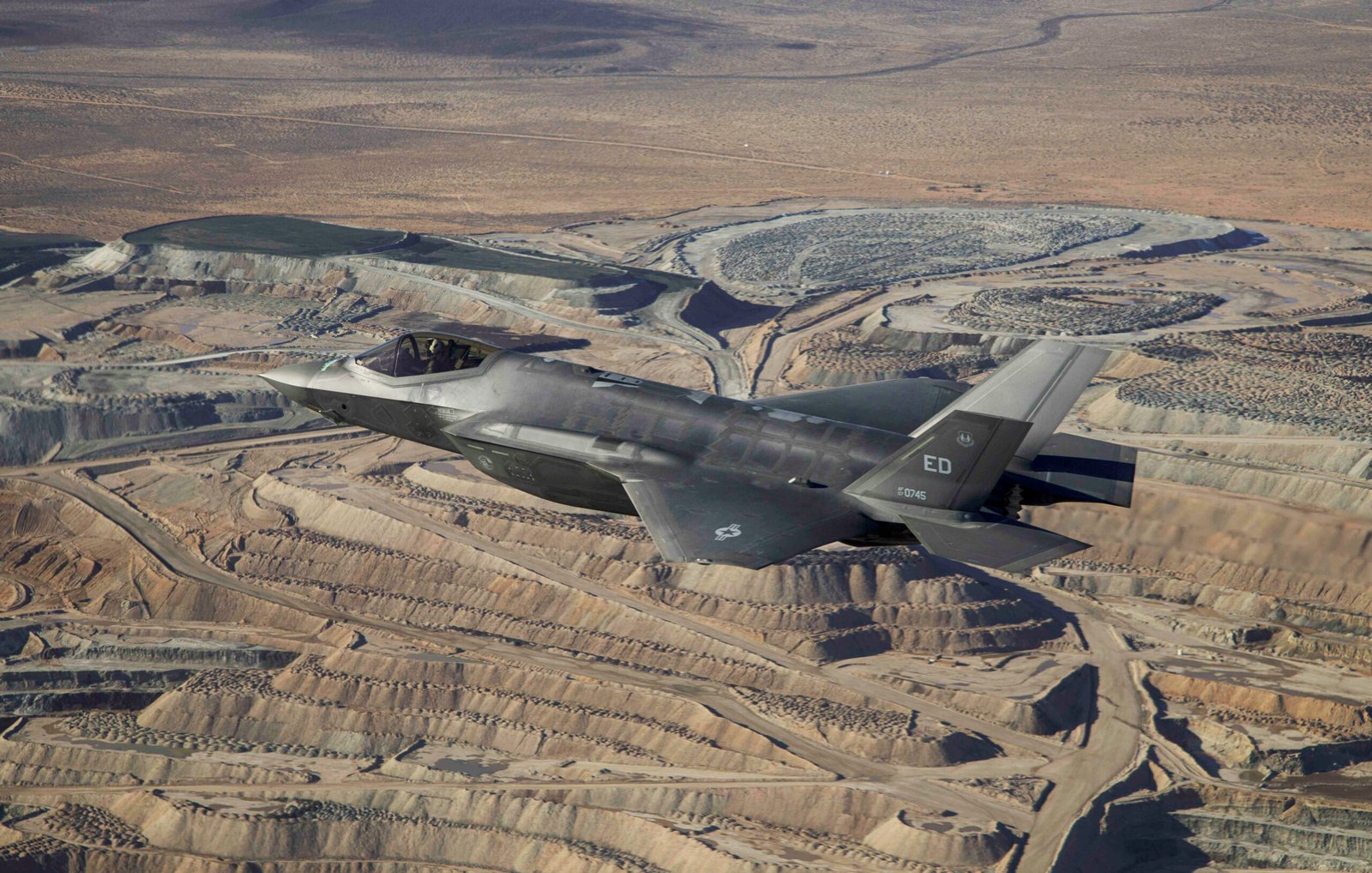
The Pentagon and Lockheed Martin have unveiled a plan that would reshape American airpower for a decade: a 10-year framework covering at least 850 F-35 fighter jets for the United States, bundled with spare parts, upgrades and long-term sustainment.
The framework, announced on October 22, covers production Lots 21 through 30 and would hold production steady at 156 aircraft per year. It is the most ambitious long-term commitment yet for the F-35 program, the most expensive weapons system the Pentagon owns.
But the plan comes with a major caveat. The agreement is nonbinding. No jets have been ordered under it, no total price has been disclosed, and it must still be converted into formal multiyear contracts and receive authorization and funding from Congress before prices, delivery schedules and legal obligations are fixed.
What the framework covers
Under the framework, the United States would receive a minimum of 850 aircraft across the decade. Because the 156-per-year pace includes jets for international customers, the total production run would be larger — roughly 1,560 aircraft over ten years by simple arithmetic, leaving about 700 for foreign buyers, according to calculations by Air & Space Forces Magazine. That breakdown is the outlet’s own math, not a figure released by the Pentagon or Lockheed.
The deal also bundles initial spare parts, ten years of modification kits and sustainment work with the aircraft purchases. Officials say that bundling is meant to give suppliers the stability to plan capacity, buy parts in bulk and close the annual contracting gaps that have hurt repairs and aircraft availability.
In return for the long-term commitment, Lockheed Martin pledged at least $7 billion of its own money for program initiatives, including expanding production capacity. On the company’s October 22 earnings call, chief executive Jim Taiclet said supplier contracts under the framework would use a fixed-price structure with an escalator for inflation.
Outside analysts have estimated the plan’s face value at roughly $78.2 billion, depending on which variants are ordered, inflation and final terms. Neither the Pentagon nor Lockheed has confirmed a total value or a price per aircraft.
Why the Pentagon wants a decade-long deal
The framework is framed as a response to a readiness problem that government auditors have documented for years. The Government Accountability Office has reported falling mission-capable rates across the F-35 fleet — the share of jets actually able to fly their missions — even as the fleet has grown.
By locking in a steady production rate and a decade of sustainment funding, officials argue, the program can stabilize its supplier base, reduce the stop-start contracting that drives up costs, and make the F-35 the backbone of the Air Force’s fighter force through the mid-2030s.
The F-35 is flown by the Air Force, Navy and Marine Corps in three variants, and is also operated by a growing list of allied nations. A steady 156-jet annual run would keep production lines hot and give partner nations predictable delivery slots.
What still has to happen
Before any of this becomes real, Congress must act. Multiyear procurement authority and appropriations are required, and lawmakers will scrutinize the price, the readiness promises and the industrial-base claims.
That scrutiny is not guaranteed to be friendly. The F-35 program has a long history of cost overruns and schedule delays, and some lawmakers have questioned whether buying more of the same aircraft is the right answer when the Pentagon is also developing next-generation fighters.
For now, the framework is best understood as a statement of intent: the Pentagon and its largest contractor agreeing on the shape of the next decade, while the people who would actually have to pay for it have not yet signed on.
Sources: U.S. Department of War / Pentagon announcement via Defense News, Stars and Stripes, Air & Space Forces Magazine, Lockheed Martin earnings call.